
 Home
Home Muay Thai Gyms
 Training Classes
 Promotions
 Muay Thai Visa
 Blog
BlogNew to Muay Thai? Learn These Essential Rules First
January 9, 2026


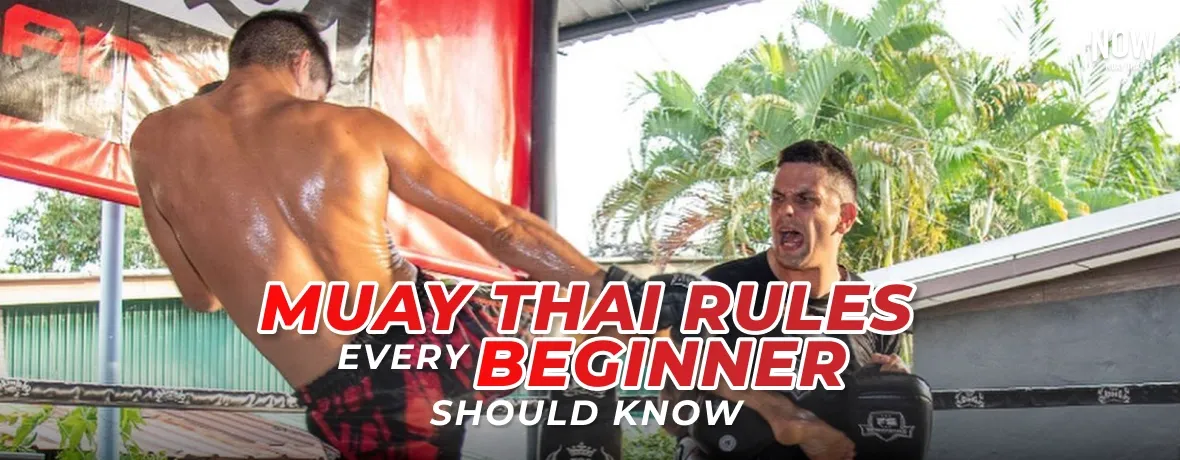
For anyone who dreams of becoming a professional Muay Thai fighter, or is simply interested in stepping into the world of Muay Thai, technical skills alone are not enough. Understanding Muay Thai rules is just as important. Knowing the rules helps ensure fair competition, safety, and proper conduct, from preparation all the way to stepping into the ring.
If you’ve decided to start learning Muay Thai, let’s walk through the essential rules every beginner should be familiar with.
Equipment and Fighter Attire
Muay Thai rules don’t apply only inside the ring. They also cover how fighters prepare, including proper equipment and attire. Here are the key requirements:- Muay Thai Shorts
Proper Muay Thai shorts should be short and worn above the knees to allow full freedom of movement. The color must clearly contrast with the opponent’s shorts as designated by the event organizer. - Hand Wraps
Fighters must use soft hand wraps. Each wrap should be no longer than 6 meters and no wider than 5 centimeters. Adhesive tape or elastic bandages may be used but must not exceed 2.5 meters in length and 2.5 centimeters in width per hand.
Important restrictions:- Wrapping over the knuckles is strictly prohibited
- No hard objects or padding may be added inside the wraps
- Hand wraps are typically provided by the event organizer. After wrapping, officials will inspect and seal the wraps to ensure compliance.
- Muay Thai Gloves
Training gloves differ from competition gloves. For official bouts, gloves are lighter with thinner padding. Common sizes include:
- 6 oz (132 g): Small weight divisions
- 8 oz (227 g): Middle weight divisions
- 10 oz (284 g): Heavier weight divisions
Referees will inspect gloves before the fight to ensure they have not been altered. - Additional Required Equipment
To maintain fairness and safety, additional rules apply:
- A groin guard must be worn and securely tied at the back
- One ankle support per foot is allowed (cannot extend into shin guards)
- Mongkol headbands and prajioud armbands are worn during the Wai Kru and must be removed before fighting
- Amulets may only be worn on the upper arm or waist and must be wrapped in soft fabric
- Vaseline, oils, or herbal substances that could disadvantage an opponent are not allowed
- A mouthguard is mandatory in all official Muay Thai bouts
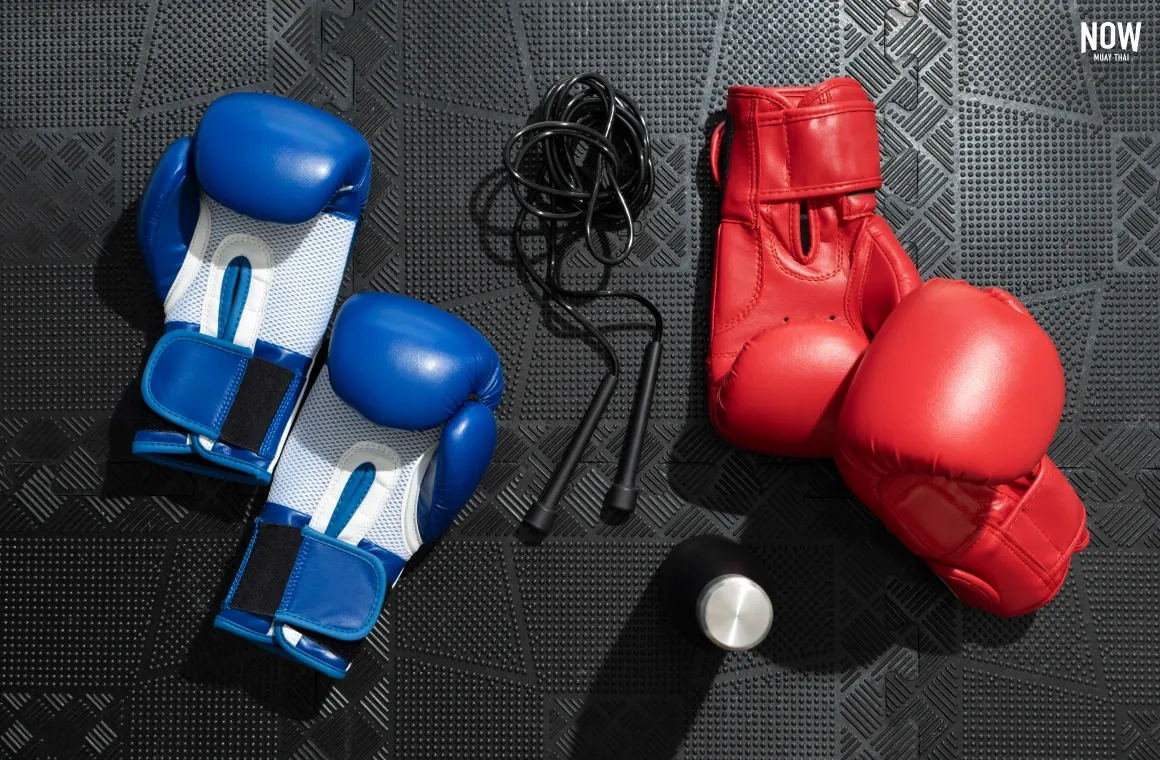 Muay Thai red and blue gloves
Muay Thai fighters know this well: Muay Thai isn’t just about power and technique—it’s a serious sport. When winning and losing are on the line, you have to give it your all, train with discipline, and understand that good manners and sportsmanship are part of being a true nak muay.
Below are the key competition manners (etiquette) in Muay Thai that every fighter—especially beginners—should learn and respect.
Muay Thai Competition Etiquette (What Fighters Should Do)
- Respect the rules at all times. A real fighter wins with skill, not shortcuts.
- Listen to the referee and follow instructions - the referee’s job is safety and fairness. You must respect their warnings, commands, and decisions immediately and without argument.
- Show respect to your opponent and the audience - no rude behavior toward your opponent or the crowd. Actions like spitting, insulting, or shouting abuse are unacceptable and reflect poorly on you and your gym.
- Show true sportsmanship - be fair, be composed, and fight clean. Win with class. Lose with dignity. That’s what earns respect in the Muay Thai world.
- Respect senior fighters before and after every bout - give proper respect to more experienced fighters and elders in the sport. Muay Thai culture is built on humility and tradition.
- Keep the tradition: Wai Kru and the ritual dance before the fight - traditionally, fighters perform Wai Kru and a ceremonial dance (Ram Muay) before competing. It honors teachers, family, the gym, and the art of Muay Thai itself.
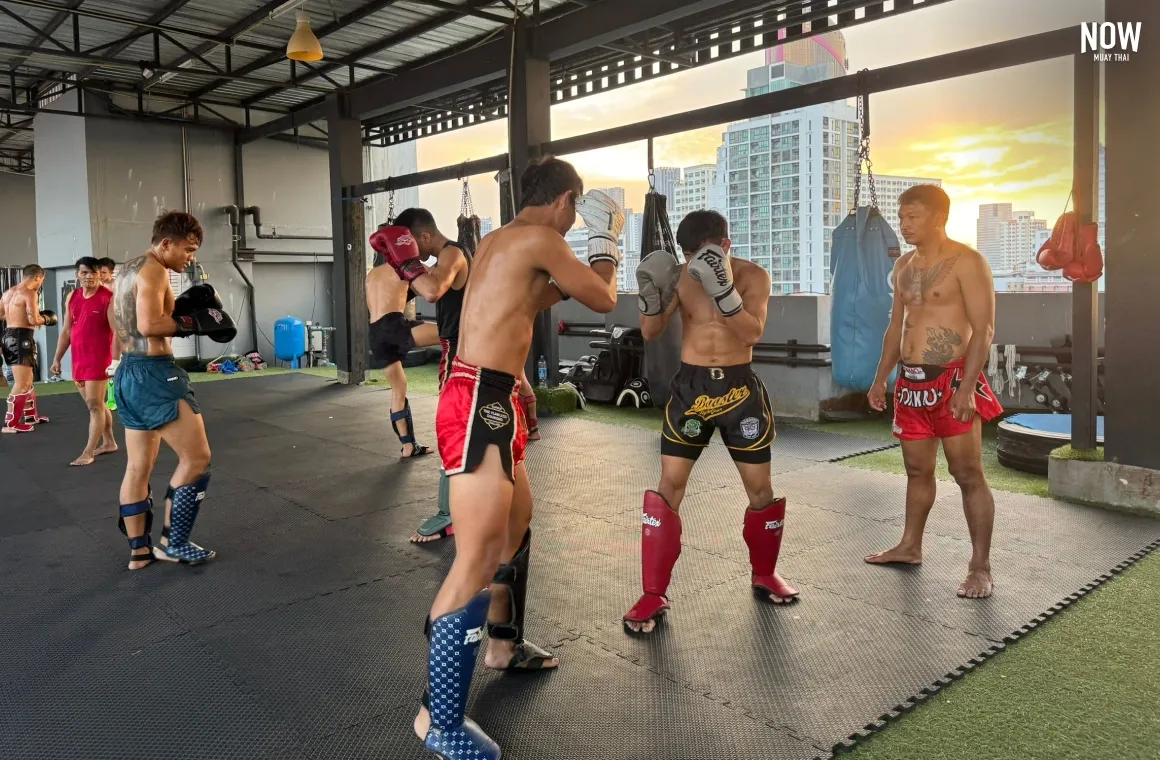 Muay Thai fighters training at the gym, following the Kru's instructions
What Fighters Should NOT Do (Dirty & Disrespectful Actions)
In Muay Thai, ignoring the referee, intentionally breaking rules, or using tricks is considered disgraceful and unsportsmanlike. Here are actions that should never happen in the ring:- Never protest the referee in an aggressive or disrespectful way - do not argue, refuse to leave the ring, threaten officials, or show hostile reactions to any decision. Even if you disagree, handle it with calm professionalism.
- Don’t humiliate or “punish” a weaker opponent - even if something is technically allowed, you should not try to embarrass, dominate excessively, or take advantage in a cruel way. Muay Thai values control and honor.
- Don't use brutal or illegal attacks - no headbutting, biting, gouging or pressing the eyes, hair pulling, or spitting at your opponent.
- Don't Wrestle in a dangerous way on purpose - do not clinch and deliberately fall on your opponent, drive elbows or knees into them while they’re down, or throw like judo/wrestling in a way that risks serious injury.
- Don't use illegal locks, trips, or throws - no locking the neck/arms/legs, tripping, hooking, sweeping, blocking with the leg, or lifting and dumping opponents in an unsafe manner.
- Don't hold onto the ropes to strike - do not grab or lean on the ropes to punch, kick, or push-kick. It’s unfair and against proper conduct.
- Don't strike a downed opponent - never attack someone while they are falling or already on the canvas.
- Don't fake a fall or fix a fight - deliberately pretending to fall, or fighting with “agreement” for money or prizes, is dishonorable and damages the sport.
- Don't use rude words or gestures during competition - trash talk, insults, mocking, or disrespectful gestures have no place in Muay Thai.
- No knee strikes to the groin - kneeing the groin area is forbidden and dangerous.
- Don't use sneaky avoidance tactics - don’t escape illegally to avoid strikes, such as crawling out under the ropes, putting a leg outside the ropes, or hiding behind the referee.
Judging and Fight Decisions
Even beginners often learn about scoring and judging early in training. Here are the basic judging rules:- A standard Muay Thai fight consists of 5 rounds, each lasting 3 minutes, with 2-minute breaks Fighters must weigh in at least 3 hours before the bout; the final weight is recorded officially
- A ringside doctor will check fighters’ physical readiness before each match
- Knockout (KO): The opponent is unable to stand before the referee’s 10-count
- Technical Knockout (TKO): The referee stops the fight due to excessive damage, multiple knockdowns in one round, inability to continue, or failure to leave the corner
- Judges score each round on a 10-point system; the fighter with the higher total after 5 rounds wins
- Aggressive behavior toward referees, opponents, officials, or spectators is strictly prohibited
 Two fighters at the ring greeting each other before the start of a muay thai boxing fight
Muay Thai Weight Classes
Muay Thai weight divisions are determined by body weight. Trainers usually assess beginners and guide them toward the most suitable division. Common weight classes include:- Mini Flyweight: up to 104 lbs (47.7 kg)
- Light Flyweight: up to 108 lbs (49 kg)
- Flyweight: up to 112 lbs (50.8 kg)
- Bantamweight: up to 118 lbs (53.5 kg)
- Featherweight: up to 126 lbs (57.1 kg)
- Lightweight: up to 135 lbs (61.2 kg)
- Welterweight: up to 147 lbs (66.6 kg)
- Middleweight: up to 160 lbs (71.6 kg)
- Light Heavyweight: up to 175 lbs (79.4 kg)
- Cruiserweight: up to 190 lbs (86.2 kg)
- Heavyweight: over 190 lbs (86.2 kg+)
Why This Matters
Good Muay Thai etiquette protects your reputation and honors your gym. How you behave in the ring represents your trainer, your camp, and the tradition of Muay Thai itself.
If you’re a fighter or simply someone who loves Muay Thai keep the spirit of sportsmanship strong. Fight with heart, fight with honor, and respect the art.
Final Thoughts
These are the essential Muay Thai rules every beginner should understand. If you’re ready to start your Muay Thai journey, visit nowmuaythai.com to discover top Muay Thai gyms across Thailand. From beginner-friendly classes to advanced fight training, you’ll find programs that match your goals, at prices more accessible than you might expect.After understanding the basic Muay Thai rules, the next step is to build real knowledge, confidence, and skills both inside and outside the gym. Whether you’re just starting your training journey or planning to train seriously in Thailand, learning from the right resources makes all the difference.
Prepare yourself for training the right way:
- The Essential Kickboxing Guide for Beginners
- Muay Thai Gloves: Types, Fit, and Care Tips
- How to Choose the Right Muay Thai Gym in Thailand
- Easy Muay Thai Techniques for Beginners
- Start Your Muay Thai Fitness Journey the Right Way
And if you’re ready to stop reading and start training, you can book Muay Thai classes directly with trusted gyms through nowmuaythai.com - from beginner-friendly programs to intensive fighter training, all in one place.
Your Muay Thai journey starts with one step. Make it count.
Learn more about Muay Thai

Essential Travel Safety Guide for Thailand: Weather, Preparedness, & Emergency Action
Inside a Thai Muay Thai Camp: How Fighters Train, Eat, Recover and Prepare for Competition
What Happens During a Typical Muay Thai Training Session in Thailand?
How to Improve Your Kicks in Muay Thai: Balance, Power & Technique
Back