
 Home
Home Muay Thai Gyms
 Training Classes
 Promotions
 Muay Thai Visa
 Blog
BlogHow to Improve Your Kicks in Muay Thai: Balance, Power & Technique
September 25, 2026


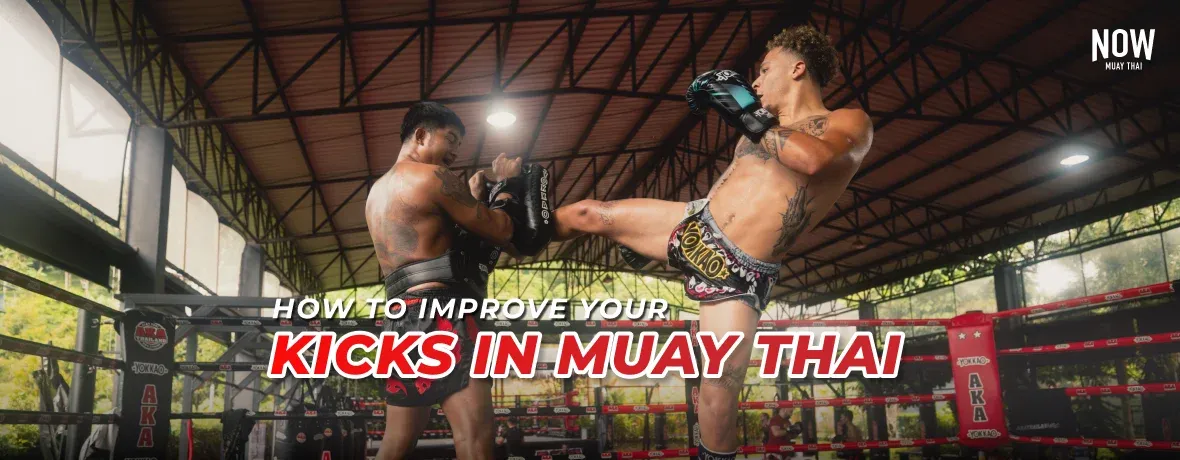
A better Muay Thai kick isn't simply about kicking harder. It comes from combining clean mechanics, controlled movement, mobility and enough repetition to make the technique instinctive.
Kicks are among the most distinctive techniques in Muay Thai, but they can also be some of the most difficult to master. A round kick asks your body to rotate, balance on one leg and deliver force at the same time. For beginners and recreational practitioners, the key is not trying to produce maximum power immediately. It is learning how each part of the movement works and then putting those pieces together.
Build the Kick From the Ground Up
A strong kick starts with the foot that stays on the floor. As you throw a round kick, the supporting foot pivots and allows the knee, hip and torso to rotate into the strike. If that foot stays completely fixed, the movement becomes restricted and your hip has less room to turn.
Think of the kick as a chain rather than an isolated leg movement: supporting foot → hip → torso → kicking leg. The better those elements work together, the more efficient the strike becomes.
A useful technical cue: don't concentrate only on the leg that is kicking. Pay attention to what your supporting foot and hip are doing.
Find Power Without Forcing It
Beginners often try to create power by swinging the leg as hard as possible. This usually produces more tension rather than more impact. The goal is to let the rotation of the body contribute to the strike instead of relying entirely on the muscles of the kicking leg.
Start at around 50–60% power and concentrate on a smooth movement. Once the technique stays consistent, gradually increase the intensity. If the kick becomes noticeably slower, unstable or difficult to recover from, you have probably added more force than your technique can currently support.
Power is useful. Efficient power is better.
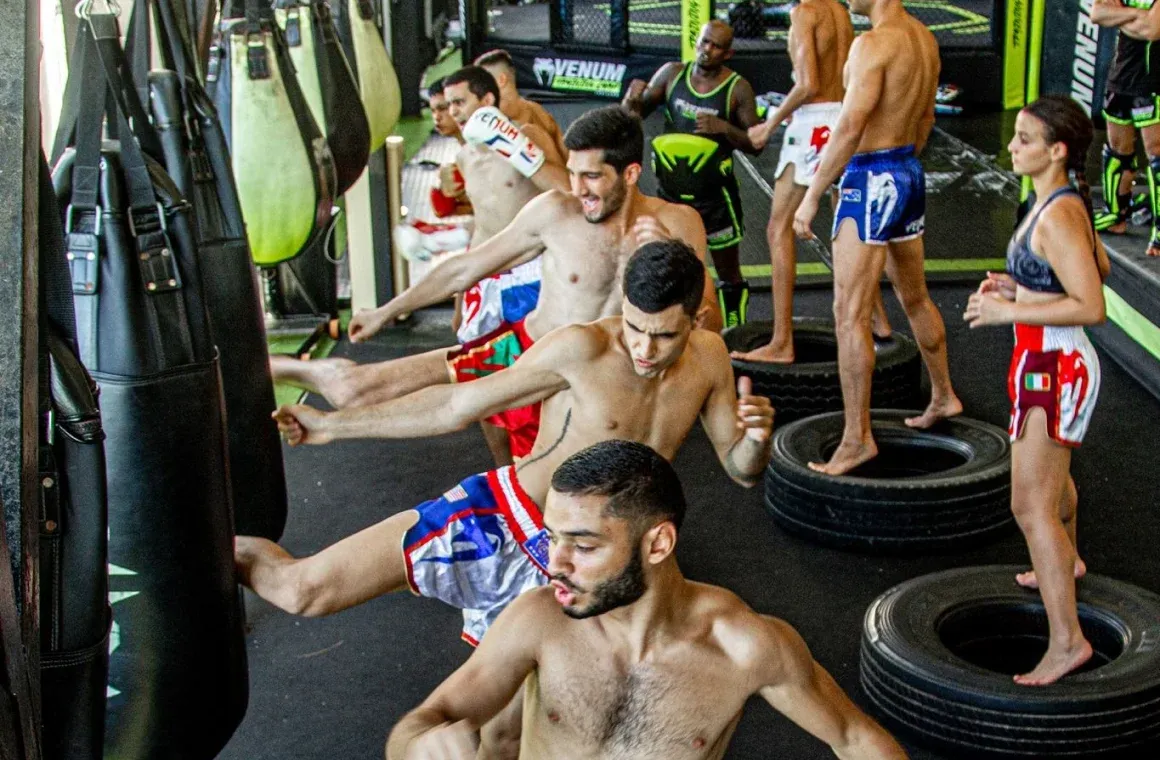 People practicing kicks at Venum Training Camp in Pattaya
Keep Your Balance After the Strike
A kick isn't finished when it reaches the target. Your ability to recover matters just as much. After the strike, you should be able to return to your stance without taking several unnecessary steps or completely losing your position.
This is particularly important in sparring. A technically powerful kick that leaves you off-balance can give your opponent an easy opportunity to counter.
Try pausing for one second after each practice kick. If you cannot comfortably control your position, reduce the power and work on the movement again.
Mobility: Get Enough, Not Everything
Flexibility can make kicking easier, particularly when working toward higher targets, but you don't need extraordinary flexibility to develop effective Muay Thai kicks.
Focus your mobility work on the areas that contribute directly to your technique: hips, hip flexors, hamstrings, adductors and ankles. Dynamic mobility is useful before training, while longer static stretches can be included after training or in a separate mobility session.
More range of motion is only useful when you can control it. Don't force your leg higher than your current mobility allows simply because you want to reach the head.
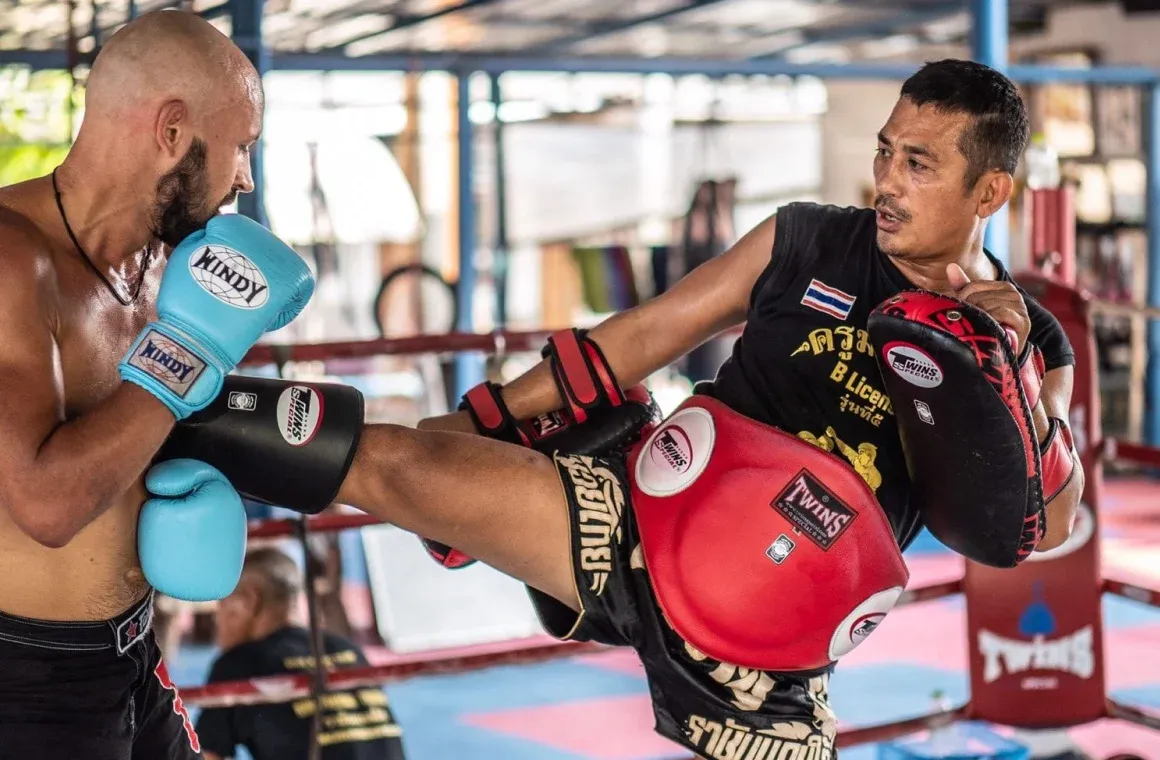 Trainer shows kicks to a beginner at AKA Thailand in Phuket
Train the Same Kick in Different Situations
Technique practiced in isolation doesn't automatically transfer to a moving opponent. Your kicking practice should gradually introduce different types of feedback.
Control
Practice the complete movement without a target. Focus on posture, balance, chambering and returning to your stance.
Impact
Use the bag to develop distance, timing and impact. Alternate technical kicks with harder strikes instead of throwing every kick at maximum power.
Timing
Pad work adds a moving target and lets your trainer adjust distance, rhythm and combinations.
Reaction
Controlled partner drills teach you to recognize distance and respond to movement rather than throwing every kick from a fixed position.
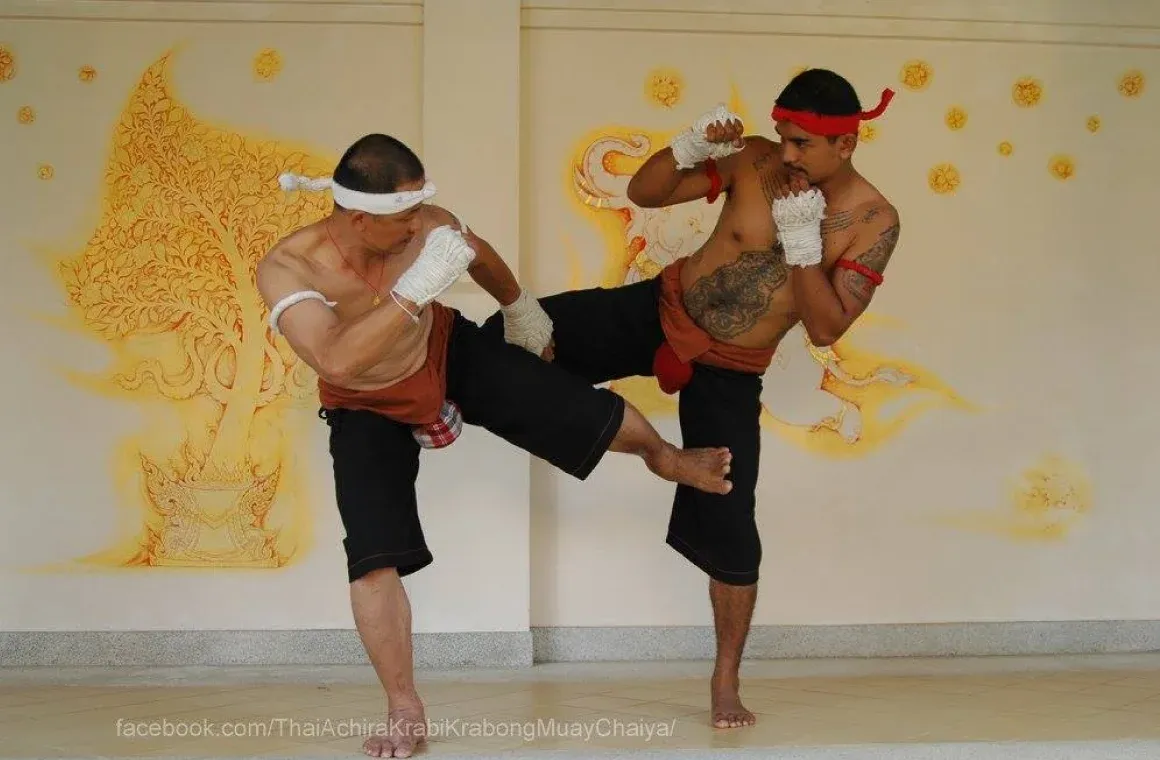 Try Muay Chaiya or Muay Boran at Thaiachira in Bangkok
Use Repetition to Clean Up Your Technique
Repetition is where technique becomes automatic, but quantity isn't the only measure that matters. Ten focused repetitions can be more useful than fifty rushed kicks.
Pick one detail for each round rather than trying to correct everything simultaneously. One round might focus on the supporting-foot pivot. Another can focus on returning to stance. Later, combine the elements.
- Practice slowly enough to feel every part of the movement.
- Increase speed without changing the basic technique.
- Add power only after you can maintain control.
- Practice both sides rather than relying exclusively on your dominant leg.
Common Mistakes That Slow Progress
Trying to Kick Too Hard
Maximum effort can hide technical problems. Reduce the power until you can perform the movement consistently.
Ignoring the Supporting Foot
A restricted pivot can limit the rotation of the rest of the body. Practice the pivot separately if necessary.
Dropping the Guard
Beginners often focus so heavily on the kicking leg that their hands disappear. Keep your defensive position while practicing.
Chasing Head Kicks Too Early
A higher target isn't automatically a better kick. Develop control and mobility before forcing your range.
Only Training the Strong Side
Your dominant leg will naturally feel easier. Give the weaker side deliberate repetitions so your overall kicking game becomes more versatile.
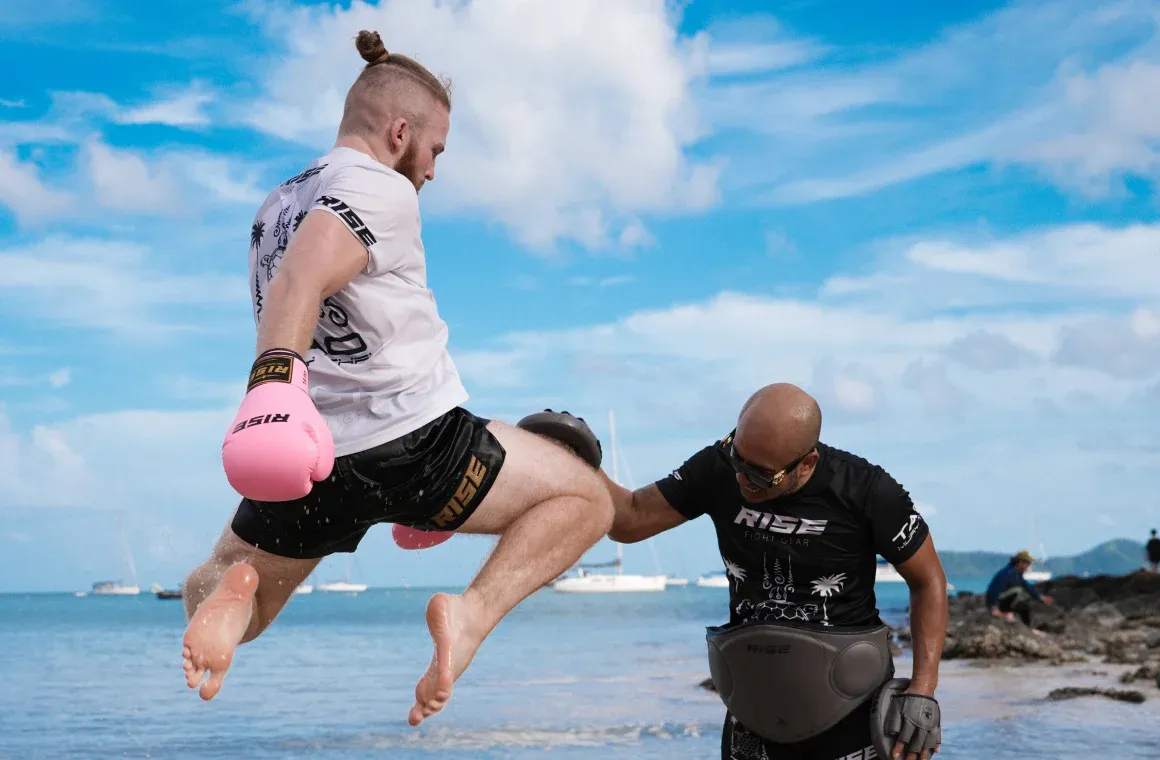 Training on the beach at Tao Muay Thai in Phuket
Three Simple Kicking Sessions
You don't need a separate two-hour kicking workout. A few focused rounds added to your regular Muay Thai training can provide plenty of useful practice.
A Simple Weekly Structure
Technique: 3 × 2 min shadowboxing, followed by 3 × 10 controlled round kicks per side. Focus on the supporting foot and recovery.
Power: 3 × 2 min bag rounds. Start with technical kicks and gradually introduce harder strikes without sacrificing balance.
Combinations: Work combinations such as jab–cross–rear kick or jab–hook–rear kick on pads or the heavy bag. Focus on transitioning between punches and kicks.
If You're Preparing to Train in Thailand
Arrive Ready to Learn
If you're planning to train in Thailand, don't worry about mastering advanced kicking techniques before you arrive. Your time is better spent developing a reliable stance, basic round kick, teep, conditioning and the ability to repeat techniques while tired.
Thai training can involve a high number of repetitions, particularly during pad and bag work. Being comfortable with simple techniques and sustained training will make it easier to concentrate on your trainer's corrections once you're in the gym.
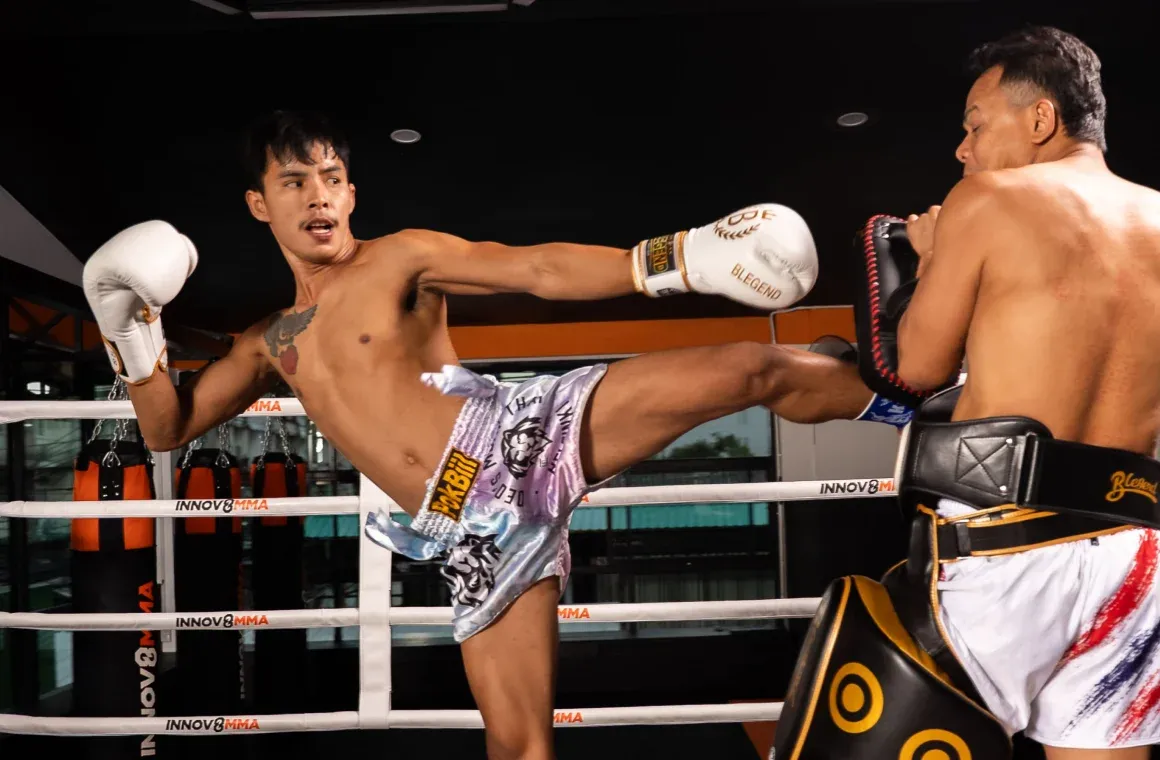 Train at INNOV8 MMA in Bangkok
Make Every Kick Cleaner
Better kicking isn't about collecting more techniques. Start with one reliable kick and make it more controlled, more efficient and easier to repeat. Once the movement feels natural, add speed, power, combinations and different targets. The result is a kick that doesn't just look powerful — it works when you actually need it.
Want to Improve Your Muay Thai Kicks in Thailand?
Improving your kicks takes more than repeating the same movement on your own. Training with experienced coaches gives you regular feedback on your technique, balance, timing, power, and recovery — while different pads, bags, and training partners help you learn how to use your kicks in real training situations.
Whether you're a beginner working on your first round kick or an intermediate practitioner looking to make your kicking more powerful and consistent, training at a Muay Thai gym in Thailand gives you the opportunity to build these skills through regular practice. Explore Muay Thai gyms across Thailand and find a training environment that matches your experience level, goals, location, and schedule with Now Muay Thai.
Want to Learn More About Improving Your Muay Thai?
- Muay Thai Distance Management: Learning When to Attack and Defend
- Muay Thai Recovery Guide: Ice Baths, Thai Massage & Namman Muay for Your First Week in Thailand
- Walk-in vs. Online Booking: Which Is the Best Way to Book a Muay Thai Class in Thailand?
- Authentic Fight Camp vs. Modern Boutique Gym: Which Muay Thai Experience Is Right for You?
- How to Plan Your Muay Thai Trip in Thailand Around Your Schedule
- Why Female Travellers Should Try Muay Thai in Thailand
- Find Your Best Version Through Muay Thai
Learn more about Muay Thai

Muay Thai Distance Management: Learning When to Attack and Defend
Muay Thai Recovery Guide: Ice Baths, Thai Massage & Namman Muay for Your First Week in Thailand
Authentic Fight Camp vs. Modern Boutique Gym: Finding Your Perfect Muay Thai Fit in Thailand
Walk-in vs. Online Booking: Which Is the Best Way to Book a Muay Thai Class in Thailand?
Back