
 Home
Home Muay Thai Gyms
 Training Classes
 Promotions
 Muay Thai Visa
 Blog
BlogMuay Thai Recovery Guide: Ice Baths, Thai Massage & Namman Muay for Your First Week in Thailand
September 3, 2026


Thailand is one of the best places in the world to train Muay Thai. You arrive excited, buy your gloves, wrap your hands, step into the gym, and suddenly discover that the training is a little harder than it looked on Instagram. The first day can feel amazing. You are tired, sweaty, and proud of yourself. The second day is harder. And then, somewhere around Day 3, you may wake up and wonder why walking down the stairs has suddenly become a serious athletic challenge. This is oftеn called “hitting the Day 3 wall.” Your body is adapting to a completely different workload: thousands of kicks, punches, knees, footwork drills, pad rounds, bag work, skipping, conditioning, and sometimes two training sessions a day. The good news? Being sore does not mean you have to stop training. Learning how to recover is part of learning how to train.
From the familiar smell of Namman Muay before pad work to a traditional Thai massage on your rest day and the increasingly popular ice bath after a brutal session, Thailand has its own recovery culture. Add sleep, hydration, food, mobility, and sensible training volume, and your first week becomes much easier to manage.
So how do you recover quickly from Muay Thai training?
There is no magic recovery treatment. Instead, the most useful approach is to combine pre-training preparation, sensible training volume, active recovery, nutrition, hydration, and sleep with recovery methods that help you feel ready for your next session. Here is how to survive your first week at a Muay Thai camp without spending the entire trip walking around like a broken robot.
 muay thai fighter
Hitting the Day 3 Wall: Why Your First Week Feels So Hard
If you are new to Muay Thai, your first few sessions can be a shock. Even if you are already fit, Muay Thai uses your body differently from running, cycling, weightlifting, or conventional gym workouts. You are constantly changing direction, rotating your hips, balancing on one leg, bracing your core, using your shoulders, gripping during clinching, and repeatedly striking with your legs. And then there is the volume. A typical training session can include:
- Skipping or running
- Shadowboxing
- Pad work
- Heavy bag work
- Technique drills
- Teep and kick repetitions
- Clinching
- Bodyweight conditioning
- Core exercises
- Stretching and cooldown work
If you train once a day at home, suddenly doing two sessions every day in Thailand can be a huge increase in workload. That is why the first week is not necessarily about proving how tough you are. It is about learning how much training your body can actually handle. You might feel relatively fine after your first session because soreness from unfamiliar exercise can take time to appear. By Day 2 or Day 3, however, your muscles may feel significantly more fatigued. The biggest mistake is often trying to solve this by simply pushing harder. Recovery should be treated as part of the training itself.
Don't Try to Win Your First Week
If you are staying at a Muay Thai camp for several weeks, you do not need to destroy yourself on Day 1. Your first week is an adaptation period. Pay attention to how your body responds, communicate with your trainers, and increase your training volume gradually. If you are extremely sore, there is nothing wrong with reducing the intensity, skipping an optional conditioning session, or taking a rest day. The goal is to learn how you can train consistently over the next few weeks?
Namman Muay – The Scent of a Fighter
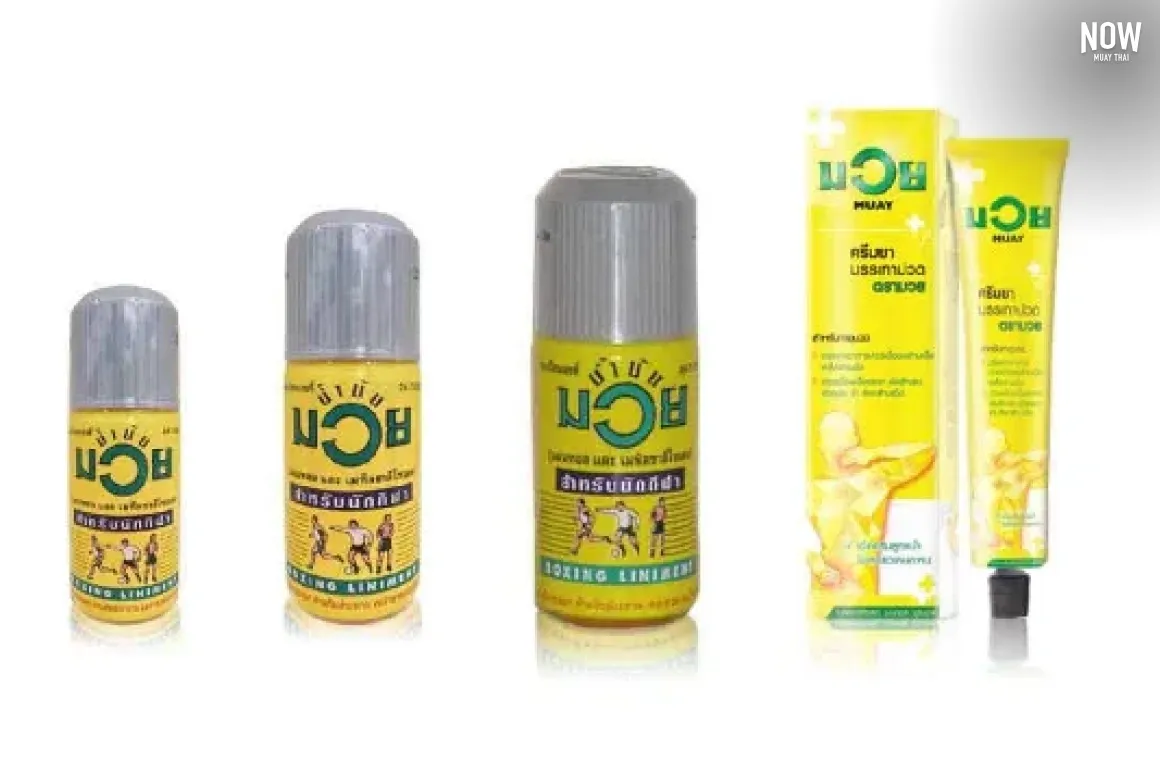 famous namman muay oil, helping with recovery after training
Walk into almost any traditional Muay Thai gym in Thailand and you may notice it immediately. That distinctive herbal, mentholated smell is one of the unofficial scents of Muay Thai. Namman Muay is a traditional Thai liniment widely associated with Muay Thai training. Fighters commonly apply liniment to areas such as the legs, shoulders, arms, and other muscles before or after training. For many people training in Thailand for the first time, it quickly becomes part of the ritual. You wrap your hands. You put on your gloves. You warm up. Someone applies liniment. Then you step onto the pads. It is not simply about the product itself. The smell becomes associated with training.
What Does Namman Muay Do?
Traditional Thai liniments are commonly used to create a warming or cooling sensation and as part of pre- and post-training massage routines. For athletes, the main attraction is often the feeling rather than some miraculous recovery effect. Applying liniment and massaging the muscles can help you feel warm, prepared, and more comfortable before training. It is important, however, not to think of Namman Muay as a replacement for proper warm-up, hydration, sleep, or medical treatment. Think of it as one small part of your recovery and preparation routine.
How to Use Namman Muay Around Training
Many Muay Thai practitioners use liniment before training as part of their preparation. A small amount can be massaged into the muscles before warming up. After training, some athletes use it again as part of a massage routine for tired muscles. A simple first-week routine could look like this:
- Before training: Apply a small amount to the areas that need warming, then complete your normal warm-up.
- During training: Focus on technique, movement, and listening to your trainer rather than trying to compensate for soreness with more liniment.
- After training: Shower, hydrate, eat, and use liniment or massage as a comfort/recovery ritual if it works well for you.
Remember that liniment is for external use. Avoid your eyes, broken skin, and sensitive areas, and follow the instructions on the specific product you are using. The bigger lesson is simple: Namman Muay can be part of the fighter's routine, but it cannot replace recovery fundamentals.
Traditional Thai Massage – “The Lazy Man's Yoga”
 Thai Massage
There is a reason Thai massage and Muay Thai have become so closely connected. Muay Thai demands a lot from your hips, legs, back, shoulders, and feet. Traditional Thai massage uses assisted stretching, pressure, compression, and movement to work through the body. Unlike a typical relaxing oil massage, traditional Thai massage can be surprisingly intense. You may find yourself being stretched, compressed, twisted, or positioned in ways that make you wonder whether you accidentally signed up for another training session. But when done appropriately, it can feel fantastic after several hard days of training.
Why Thai Massage Can Be Useful for Muay Thai Practitioners
Thai massage can be particularly appealing during a longer training stay because it combines massage with assisted movement and stretching. Potential benefits include:
- Temporary relief from muscle tightness
- Improved feeling of mobility
- Relaxation
- Assisted stretching
- A chance to slow down on a rest day
- Helping you feel more comfortable before your next training session
But there is an important rule:
Don't treat an aggressive massage like another workout.
If your muscles are already extremely sore after several hard sessions, a very intense massage may leave you feeling worse rather than better.
When Should You Get a Thai Massage?
For many Muay Thai travelers, a rest day is the obvious choice. Instead of scheduling a very intense massage immediately before a hard training session, consider using your rest day to relax, move gently, and give your body time to recover. You can also tell your therapist that you are training Muay Thai. Let them know which areas are particularly tired and whether you want a relaxing or more intensive session. And if something hurts in a way that feels like an injury rather than ordinary training soreness, massage is not the solution. Stop and get appropriate professional advice.
The Ice Bath Plunge – Modern Biohacking Meets Muay Thai
 Ice bath
Now for the part that many first-time Muay Thai travelers either desperately want to try or absolutely do not want to think about.
You have just completed a hard training session. Your legs are shaking. Your shirt is soaked. Your heart rate is finally coming down. Then someone tells you to get into a tub filled with freezing water. Why? Cold-water immersion is widely used in sports recovery, particularly after demanding exercise. The cold can temporarily reduce the sensation of soreness and may help you feel less uncomfortable after a hard session.
However, the popular explanation that an ice bath simply “flushes lactic acid out of your muscles” is an oversimplification. Lactate is not simply sitting in your muscles waiting to be washed away by cold water. The more useful way to think about an ice bath is as a tool that may help manage post-exercise soreness and perceived recovery.
Should You Take an Ice Bath After Every Muay Thai Session?
Not necessarily. If you are training every day, you do not need to turn every session into an extreme recovery experiment. Cold-water immersion can be useful after particularly demanding sessions or when soreness is interfering with how you feel, but it is not a substitute for sleep, food, hydration, and sensible programming. There is also an important consideration for people focused on strength and muscle adaptation: frequent cold-water immersion immediately after resistance training may interfere with some training adaptations. If your Muay Thai camp also includes substantial strength training, it may be worth discussing when to use cold exposure with your coach or sports professional.
For a first-time traveler, the simplest rule is to use ice baths as an optional recovery tool, not as a mandatory part of every training day.
How to Approach Your First Ice Bath
If you have never tried cold-water immersion before, don't make your first attempt an endurance competition. Start conservatively and follow the facility's instructions. Keep the exposure controlled, get out if you feel unwell, and warm up naturally afterward. People with certain cardiovascular or other medical conditions should speak with a healthcare professional before using cold-water immersion. The goal is to recover from Muay Thai training, not to win an argument with a bathtub.
The Unsung Heroes – Active Recovery, Food, Water & Sleep
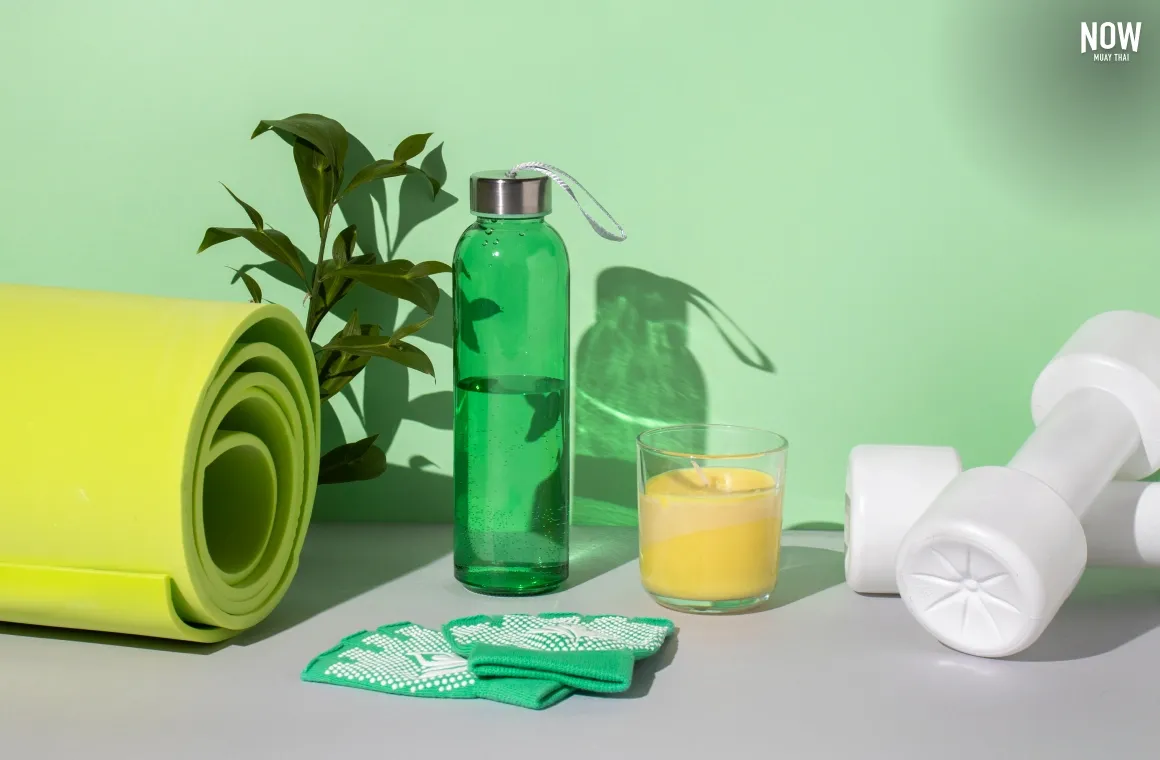 Healthy lifestyle is important during training
Ice baths, massage, and liniment are the exciting parts of recovery. But the boring things are usually more important. If you train Muay Thai twice a day and sleep five hours a night, an ice bath is not going to save your week. Your recovery foundation should include:
Sleep
Sleep is one of the most important things you can give your body during an intensive training week. If possible, aim for a consistent sleep schedule and give yourself enough time to recover between sessions. Late nights, alcohol, early morning training, and hot Thai weather can make this more difficult than it sounds.
Hydration
Thailand is hot and humid, and Muay Thai training can involve a huge amount of sweating. Drink regularly throughout the day and replace fluids lost during training. If you are sweating heavily for long periods, electrolytes can also be useful. Do not wait until you are extremely thirsty to start thinking about hydration.
Fuel
You cannot train hard without giving your body enough energy. Your meals should provide enough carbohydrates to support training, adequate protein for recovery, and plenty of micronutrients from a varied diet.
Fortunately, Thailand makes eating well relatively easy. Rice, noodles, fruit, vegetables, eggs, chicken, fish, and other protein sources are everywhere. You do not need to survive your Muay Thai camp on salads and protein shakes.
Active Recovery
A rest day does not necessarily mean spending 24 hours horizontally. Easy walking, gentle mobility work, light stretching, swimming, or relaxed cycling can help you stay moving without adding another hard training stimulus. The key word is easy. If your “recovery walk” turns into a three-hour hike through the mountains followed by a Muay Thai session, you may have misunderstood the assignment.
Your First Week Recovery Schedule
If you are completely new to Muay Thai, your first week should be about finding your rhythm rather than maximizing volume. Here is one example of how you could structure your recovery around training:
| Day | Training Focus | Recovery Focus |
|---|---|---|
| Day 1 | Learn the basics and get used to the training intensity | Hydrate, eat well, sleep early |
| Day 2 | Technique, pads, bag work and controlled conditioning | Light mobility, hydration and good nutrition |
| Day 3 | Adjust intensity according to soreness and fatigue | Active recovery, optional massage, plenty of sleep |
| Day 4 | Continue technical development without chasing exhaustion | Hydration, food and gentle stretching |
| Day 5 | Train according to how your body has adapted | Consider cold-water immersion after a particularly hard session |
| Day 6 | Train, but don't ignore accumulated fatigue | Namman Muay, mobility and early sleep |
| Day 7 | Rest or very light activity | Thai massage, walking, swimming and full recovery |
This is only an example. A proper training schedule depends on your experience, goals, fitness, the gym, and how your body responds. If you are staying at a serious fight camp, follow the program provided by your coaches rather than trying to create your own training plan from a blog.
How to Recover Between Two Muay Thai Sessions a Day
Many Muay Thai camps in Thailand offer morning and afternoon training. For experienced practitioners, this can be an excellent way to build volume. For beginners, however, two sessions every day can be a major adjustment. The hours between sessions become extremely important. A good routine might look something like:
- Morning: Muay Thai training
- Immediately after: Cool down, shower and rehydrate
- Breakfast: Carbohydrates + protein + fluids
- Late morning: Rest
- Lunch: Full meal and hydration
- Afternoon: Nap, light walking or mobility
- Pre-training: Small meal/snack and preparation
- Evening: Second training session
- Night: Dinner, hydration, relaxation and sleep
The temptation in Thailand is to fill every free hour with activities like beach, temples, night markets, boat trips or nightlife. But if you are trying to train twice a day, remember that your body does not know whether you are on holiday. It only knows that you are tired.
Featured Gym:
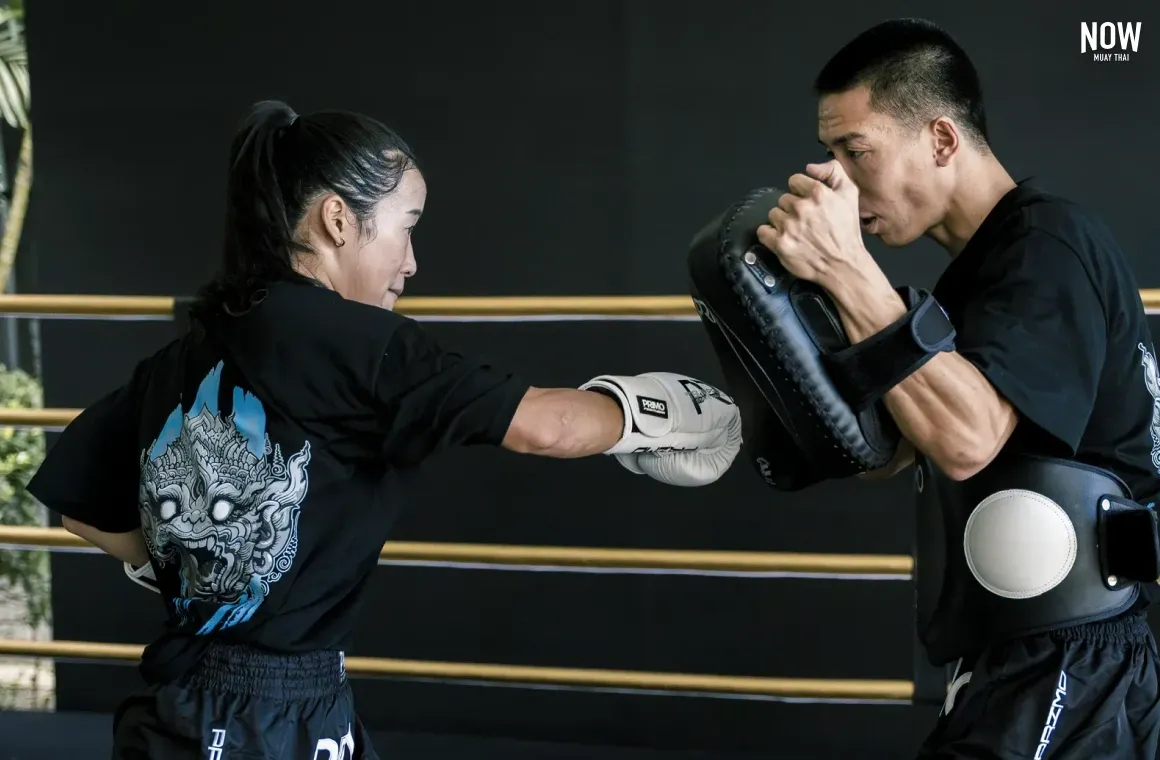
R1 Muay Thai Phuket
8:00–9:30
16:00–17:30
/ session
How to Build Your Own Muay Thai Recovery Routine
You do not need to use every recovery method available in Thailand. In fact, trying to do everything can become another source of stress. Instead, build a simple routine around your training schedule.
Before Training
- Hydrate throughout the day
- Eat enough to support the session
- Arrive early enough to warm up
- Use Namman Muay as part of your preparation if you enjoy it
- Listen to your body before the session starts
After Training
- Cool down gradually
- Drink fluids
- Eat a proper meal
- Take a shower and relax
- Use massage or liniment if they help you feel comfortable
- Consider an ice bath after particularly demanding sessions if appropriate for you
On Rest Days
- Walk
- Stretch gently
- Move without pushing intensity
- Get a traditional Thai massage if you enjoy it
- Eat well
- Sleep
The secret is not finding one incredible recovery hack. It is creating a routine that allows you to train again tomorrow.
What Not to Do During Your First Week at a Muay Thai Camp
Your first week is also about avoiding some very common mistakes.
Don't Train at 100% Every Session
You are not required to kick every pad like you are fighting for a world title. Technique matters more than ego, especially when you are learning.
Don't Ignore Sharp or Unusual Pain
Normal muscle soreness and fatigue are one thing. Sharp, worsening, or unusual pain can be a sign that something needs attention. Tell your trainer and seek appropriate medical advice when necessary.
Don't Use Recovery Treatments to Justify Overtraining
An ice bath does not give you permission to train through an injury. A massage does not erase accumulated fatigue. Namman Muay does not replace warming up. Recovery tools should support sensible training rather than allow you to ignore what your body is telling you.
Don't Forget That Thailand Is Hot
Heat and humidity can make a familiar workout feel significantly harder. Give yourself time to acclimatize, stay hydrated, and be realistic about your training intensity during the first few days.
Ice Bath vs. Thai Massage vs. Namman Muay: Which One Should You Choose?
There is no single best recovery method for every Muay Thai traveler. Each serves a slightly different purpose and, importantly, none of them replaces the basics.
| Recovery Method | Best Used For | When to Consider It |
|---|---|---|
| Namman Muay | Warming sensation, massage routine and the traditional Muay Thai experience | Before or after training |
| Thai Massage | Relaxation, temporary relief from tightness and assisted stretching | Rest days or when you have enough time to recover afterward |
| Ice Bath | Managing the feeling of post-exercise soreness and fatigue after demanding sessions | Occasionally after particularly hard sessions, depending on your goals |
| Active Recovery | Keeping your body moving without adding major training stress | Rest days and between demanding sessions |
| Sleep & Nutrition | Supporting overall recovery and training performance | Every day |
If you only remember one thing from this table, remember the last row: Sleep and nutrition are not optional recovery accessories. They are the foundation.
Exploring Thailand Between Training Sessions
One of the best things about training Muay Thai in Thailand is that you do not have to spend every waking hour inside the gym. Depending on where you train, your recovery days can become part of the travel experience.
In Phuket, you can combine Muay Thai with beaches, viewpoints, boat trips, Old Phuket Town, and island excursions. In Chiang Mai, training can fit around temples, cafés, markets, and trips into the mountains. Bangkok offers an entirely different experience, with huge amounts of food, culture, shopping, nightlife, and city life. The important thing is to remember that sightseeing is still physical activity. A full day walking around Bangkok followed by an evening Muay Thai session is not necessarily a recovery day. Plan your training and travel together.
How Many Muay Thai Sessions Should You Do in Your First Week?
There is no universal answer. A complete beginner may find that one session per day is already plenty. An experienced athlete may comfortably handle two sessions per day. Your previous training history matters enormously. If you normally exercise three times per week, suddenly doing ten or twelve Muay Thai sessions in seven days is a significant jump. A better strategy is to start below your maximum capacity and increase your volume once you understand how your body responds. And remember that more training does not automatically mean more progress. Training creates the stimulus. Recovery allows your body to adapt.
Final Thoughts: Surviving Your First Week Is Part of the Journey
Your first week of Muay Thai in Thailand will probably be uncomfortable. Your legs may hurt. Your shoulders may feel heavy. Your shins may be tender. You may discover muscles you didn't know existed. And somewhere around Day 3, you may seriously question the life choices that brought you here. That's normal. But you don't need to fight your soreness with another brutal workout. Learn to recover.
Use Namman Muay as part of the traditional preparation and massage ritual. Try a Thai massage on a rest day when your body needs some attention. Consider an ice bath after an especially demanding session if it suits you. Walk, stretch gently, eat enough, drink plenty of fluids, and most importantly, sleep.
And don't be afraid to slow down. The goal of your first week is not to prove that you can suffer. It is to finish the week feeling like you could come back tomorrow. Because that's the real secret to training Muay Thai in Thailand:
Train hard enough to improve. Recover well enough to come back. Repeat.
Want to Explore More Muay Thai in Thailand?
If you're planning a Muay Thai trip, choosing the right gym is only the beginning. Explore more guides to help you plan your training, choose your destination, and make the most of your time in Thailand:
- Authentic Fight Camp vs. Modern Boutique Gym: Which Muay Thai Experience Is Right for You?
- How to Plan Your Muay Thai Trip in Thailand Around Your Schedule
- Why Female Travellers Should Try Muay Thai in Thailand
- Find Your Best Version Through Muay Thai
- Muay Thai Gyms in Thailand: Your Destination for a Life Reset
- Everything You Need to Know About DTV Visa in 2026
Learn more about Muay Thai

Back