
 Home
Home Muay Thai Gyms
 Training Classes
 Promotions
 Muay Thai Visa
 Blog
BlogMuay Thai Distance Management: Learning When to Attack and Defend
September 23, 2026


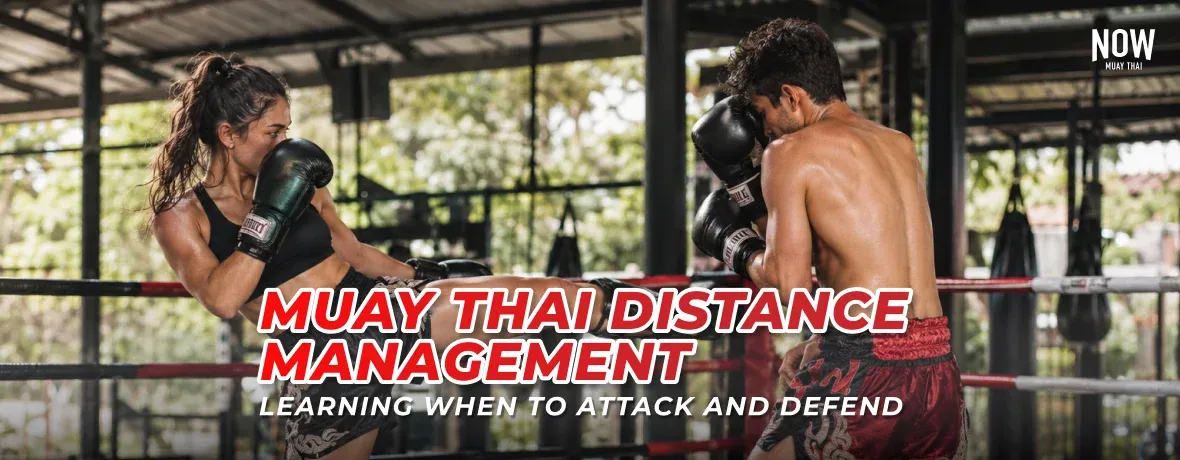
Knowing how to throw a jab, cross, round kick, teep, knee, or elbow is only part of learning Muay Thai. The question of when you should use it is arguably just as important. A technically correct strike can still miss completely if you are too far away. Move too close, and you may walk directly into your opponent's strongest weapons. Stay at the wrong distance for too long, and you may find yourself defending without ever creating a good opportunity to attack. This is where distance management in Muay Thai becomes important.
Distance management is the ability to control the space between you and your opponent so that you can attack from a useful range, defend when necessary, and move between ranges without losing balance or position. For beginners, it is easy to think of Muay Thai as a collection of individual techniques: learn the jab, learn the kick, learn the teep, learn the knee. But experienced fighters do not simply wait for the correct distance to appear. They use footwork, timing, feints, positioning, frames, and pressure to create that distance themselves. In other words: You are not just learning how to throw a strike. You are learning where that strike belongs.
What Is Distance Management in Muay Thai?
Distance management is the process of controlling how close or far you are from your opponent before, during, and after an exchange. It sounds simple, but distance is constantly changing. Your opponent can step forward. You can step backward. They can switch stance, feint a kick, reach with a jab, or pressure you toward the ropes. Even a small adjustment of the feet can change which techniques are available to both fighters. There is also no universal measurement for "correct distance." Your ideal range depends on your height, reach, stance, preferred weapons, movement, and your opponent's attributes.A tall fighter may be comfortable keeping an opponent at kicking range. A shorter fighter may need to close the distance to make their punches and knees effective. A fighter with a strong rep may deliberately maintain more space, while someone who wants to clinch will constantly look for opportunities to get closer. So instead of thinking about how many steps away you should be, think about what can both of you do effectively from this position?
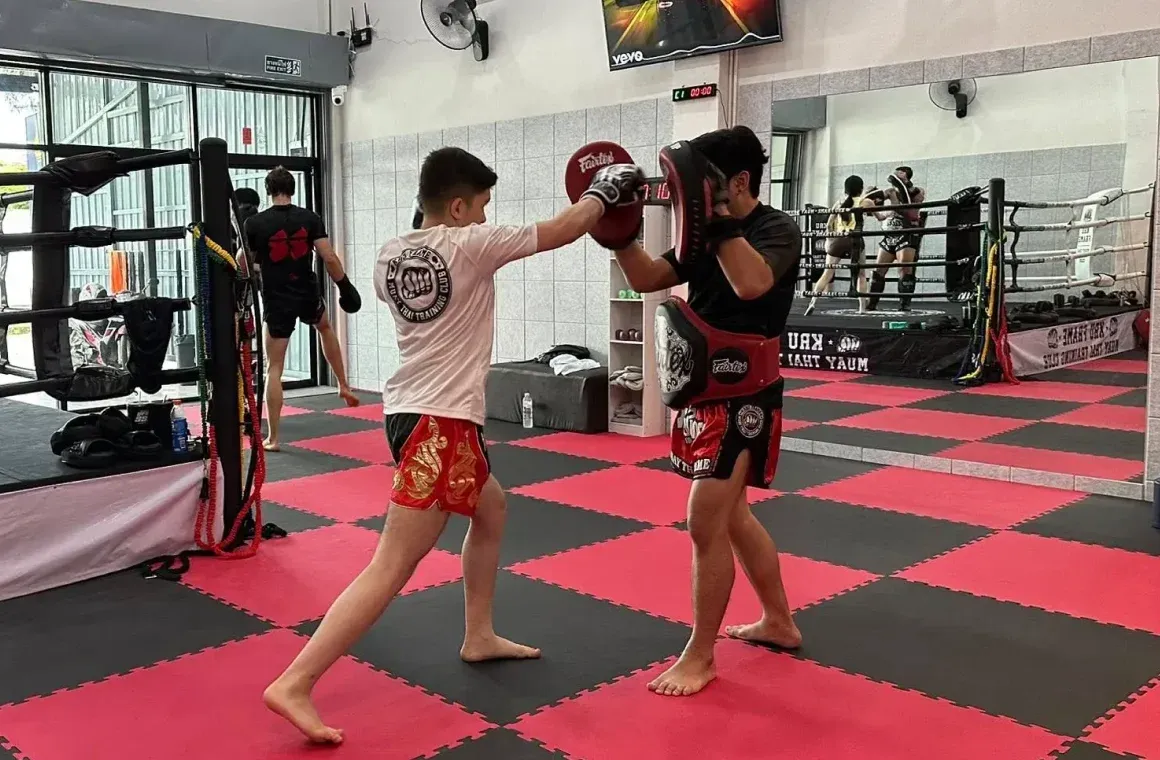 Beginner learning distance management at Kru Frame Muay Thai Gym in Chiang Mai
The Three Main Ranges in Muay Thai
There are different ways coaches and fighters describe range, and the boundaries are not fixed. For beginners, however, it is useful to think about three broad zones:- Long range: kicking and teep range
- Mid range: punching and combination range
- Close range: elbow, knee and clinch range
There is also a constantly changing transition zone between them. This is where many setups, feints, entries and counters happen. The important thing is not memorizing exact distances. It is learning to recognize which range you are currently in and which weapons are realistically available.
Long Range: Controlling the Space
Long range is where there is enough space between you and your opponent that their punches are unlikely to land without a step forward, while kicks and teeps can still reach. This is an important range in Muay Thai because the legs give you more distance than the hands. Common weapons from long range include:- Teep
- Round kick
- Low kick
- Long jab
- Long guard
The teep is particularly useful for distance management. It can be used offensively, defensively, or simply to disrupt your opponent's movement. Instead of waiting for an opponent to enter punching range, you can use the teep to make that entry more difficult. A long-range fighter may also use kicks to make an opponent hesitate about moving forward. If your opponent knows that stepping into your range immediately exposes them to a teep or round kick, they have to solve that problem before they can comfortably attack. That is distance control.
Mid Range: Where Punching Exchanges Develop
Mid range is generally where punches become easier to land without requiring a large step forward. This is where you may see:- Jab-cross combinations
- Hooks
- Body punches
- Low kicks following punches
- Kick-punch combinations
- Short defensive counters
But mid range can also be dangerous. If you remain in punching range after finishing your combination, your opponent has the opportunity to answer. A beginner may throw a three-punch combination, admire the work for half a second, and discover that the opponent is already throwing back. This is why good distance management includes knowing when to leave, not just when to enter. A useful habit is to think of combinations as having three phases:
- Enter the range
- Attack
- Exit or reposition
Close Range: Knees, Elbows and the Clinch
When the distance becomes very small, the fight changes. Long punches and full kicks become harder to use because there is no longer enough space to extend them properly. Instead, knees, elbows, short punches, frames and clinch control become increasingly important. This range can appear suddenly. For example, two fighters may begin at kicking range, exchange punches, and then continue moving forward until they are chest-to-chest. The mistake beginners often make is thinking that being close automatically means they should keep punching. Sometimes the correct response is to clinch. In other situations it is to create space and return to kicking range. Sometimes the opponent is already too close for the technique you originally intended to throw, meaning you need to adapt rather than force it. Close-range fighting is therefore not simply another collection of techniques. It is another distance problem.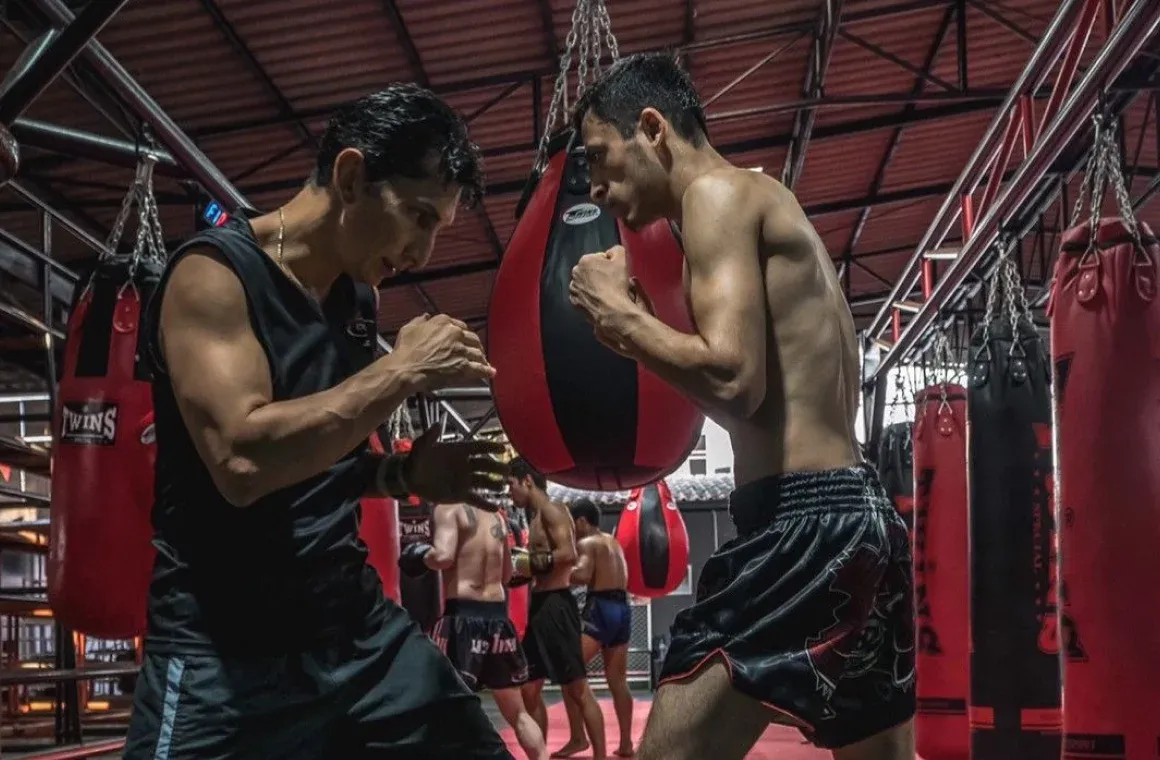 People training at Fight EVO360 in Pattaya
Where to Practice Distance Management in Thailand
Understanding distance is one thing. Learning to feel it while someone is moving toward you is another. If you want to take these ideas from the page into the gym, several Muay Thai gyms across Thailand offer beginner-friendly training where you can work on footwork, timing, striking technique, positioning, and moving in and out of range.
A beginner-friendly environment for building fundamental Muay Thai skills and developing confidence with movement and distance.
Bangkok INNOV8 MMA BangkokStructured technical training for beginners through experienced fighters, with drills and controlled sparring.
Bangkok Marrok Fitness Gym & Combat SportsGroup and private Muay Thai sessions for developing technique with coaching suited to different experience levels.
Bangkok Ranger Gym Powered by MigakuPrivate training options give beginners the opportunity to work closely with a coach on movement, technique, and positioning.
Chiang Mai Kru Frame Muay Thai Training ClubA fundamentals-focused gym where balance, timing, clean technique, and individual corrections are part of the learning process.
Chiang Mai Thaikla MuayThaiTraining for different experience levels that combines technical work, pad work, and partner drills.
Pattaya FIGHT EVO360Structured training that helps students develop striking skills alongside tactical movement and execution.
Pattaya Kombat Group ThailandCoach-led training covering fundamentals, footwork, timing, and striking technique in a beginner-friendly setting.
Phuket AKA ThailandDaily Muay Thai classes for beginner through advanced levels, plus private sessions for more individualized coaching.
Why Distance Changes the Effectiveness of Your Techniques
Every Muay Thai weapon has a range where it can be used effectively. That does not mean a technique only works at one exact distance. Rather, its mechanics and effectiveness change as the distance changes. For example, imagine throwing a round kick from too close. You may not have enough room to generate the same movement and extension as you would from a better distance. Now imagine trying to throw a clean hook from too far away. You may have to reach or overstep, which can compromise your balance and leave you vulnerable. The same principle applies to knees and elbows. Trying to force a long-range technique from close range can make the movement awkward. Trying to use a close-range weapon from too far away can leave you reaching for the target. That is why experienced fighters often look like they are "doing less." They are not necessarily throwing more techniques. They are getting themselves into the right position for the technique they want to use.How to Enter Range Without Walking Into a Counter
One of the most important distance-management skills for beginners is learning how to enter. If your opponent is outside your punching range, you cannot simply stand there and throw a cross at them. You need to close the distance. But walking forward without a plan is dangerous. Your opponent can meet your entry with a teep, jab, round kick, knee, or counter combination. Instead, think about entering behind something.Enter Behind the Jab
The jab can help you cover distance while giving your opponent something to react to. You can use it to:- Measure your opponent's reaction
- Occupy their guard
- Disrupt their vision
- Set up the cross or hook
- Step into punching range safely
The important part is not simply throwing the jab. Pay attention to what happens after it. If your opponent moves backward, you may need to follow without overreaching. If they counter immediately, you may need to exit or defend. If they shell up, you may have an opportunity to continue the combination.Enter Behind the Teep
The teep can also be used to manipulate distance. You might teep an opponent backward and then follow them as they recover their stance. Or you might use the threat of the teep to make them hesitant about stepping forward. This creates a simple push-and-pull relationship: You control the distance → they react → you respond to their reaction.Use Feints Before You Enter
You do not always need to actually strike to make your opponent move. A small shoulder movement, level change, foot movement, or half-step can make an opponent react. If they retreat when you feint a kick, for example, you have learned something about their defensive response.
 Thaikla Gym in Chiang Mai offers women only training
How to Exit Range After Attacking
Entering range gets you into the exchange. Exiting range determines whether you remain there long enough for your opponent to answer. One of the most common beginner mistakes is throwing a combination and then standing directly in front of the opponent. Instead, develop the habit of finishing your attack with a movement or defensive action. For example:- Jab-cross → step back
- Jab-cross-hook → angle out
- Cross-low kick → reset your stance
- Jab-cross → teep to create space
- Combination → long guard → reposition
The exact response depends on what your opponent is doing: if they are coming forward aggressively, stepping straight back may be useful temporarily or if they are chasing you, however, constantly retreating in a straight line can eventually put you against the ropes. That is when angles become important.
Why Angles Matter in Distance Management
Distance is not only about moving forward and backward. You can also change the relationship between you and your opponent by moving sideways or creating an angle. Imagine an opponent walking directly toward you. If you continuously move backward, they can continue following you. Instead, you can sometimes step off the line, pivot, or circle so that they have to adjust their position before they can attack again. This is one reason footwork is so important in Muay Thai. Footwork determines where your body is positioned relative to your opponent, which in turn determines which weapons are available. The goal is to stay balanced while constantly adjusting your position. Small steps are often more useful than large movements. Large steps can take you out of range, but they can also make it harder to attack immediately afterward. Small adjustments allow you to maintain your stance and remain ready to strike, defend, or change direction.Distance Management Is Also Defensive
Many beginners think of defense as blocking, checking, or avoiding individual strikes. Distance itself can be a form of defense. If your opponent's punch cannot reach you, you do not need to block it. If you move just far enough away from a round kick that it misses cleanly, you may already have created an opportunity to counter. You do not always need to defend the strike after it reaches you. Sometimes you can defend by controlling whether it reaches you at all. Depending on the attack, defensive distance management may include:- Stepping out of range
- Moving laterally
- Using a teep to interrupt the entry
- Using a long guard or frame
- Checking kicks
- Blocking or parrying
- Closing distance to smother an attack
- Clinching when appropriate
The correct response depends on the incoming technique and the position of both fighters.
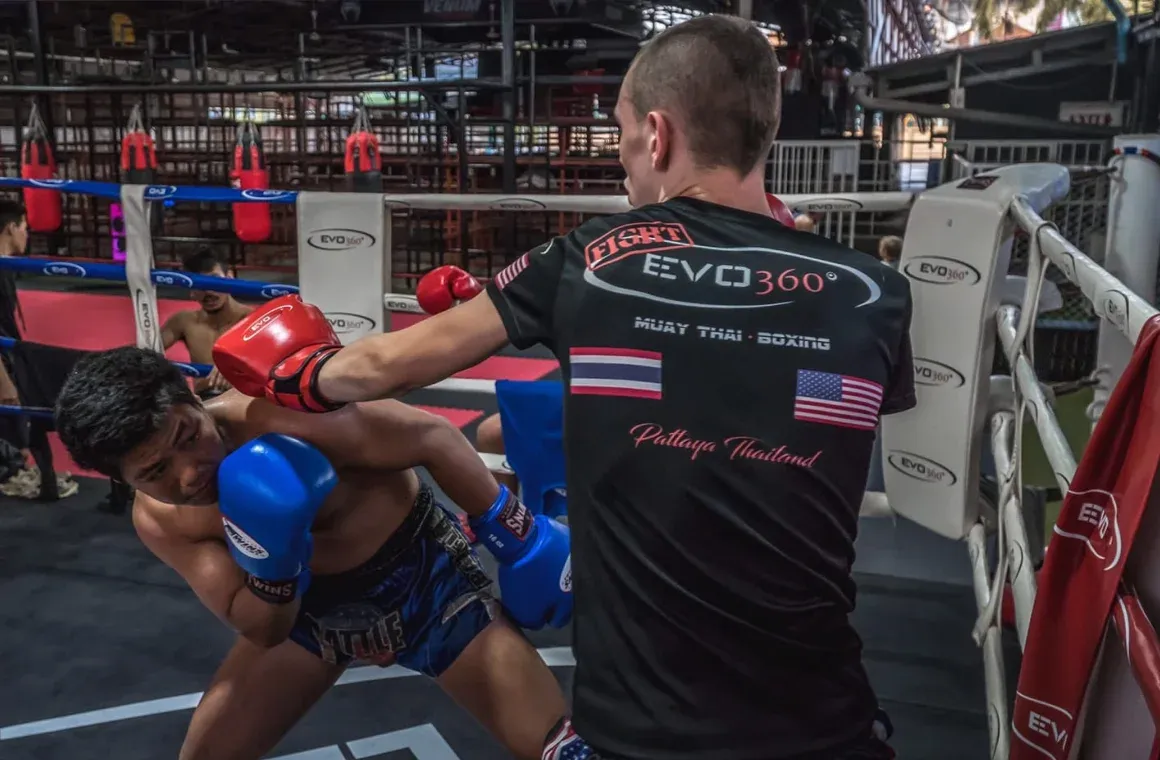 Learn Distance Management at Fight EVO360 in Pattaya
When Should You Move Away and When Should You Move In?
This is one of the most useful questions you can ask while sparring. If an opponent throws a long-range kick, moving directly backward may not always be the best option. Sometimes moving inside the attack can reduce its effectiveness, depending on the technique and timing. On the other hand, moving forward against a close-range knee without controlling the distance can put you directly into danger. Instead of memorizing one defensive response, learn to recognize the relationship between the attack and the available space. A simple framework is:- Too far away to attack? Find a safe way to enter.
- At your preferred attacking distance? Attack before the opponent does.
- Opponent entering your range? Intercept, counter, or reposition.
- Too close for your intended technique? Adapt, frame, clinch, or create space.
- Opponent chasing you? Change direction instead of endlessly retreating.
Over time, these decisions become less conscious. You begin to feel when the distance is right.
The Role of the Teep in Distance Control
The teep deserves special attention because it is one of the clearest examples of a technique being used to manage distance rather than simply cause damage. A well-timed teep can:- Stop an opponent from advancing
- Push an opponent backward
- Disrupt their balance
- Interrupt combinations
- Create space when you are under pressure
- Set up another attack
- Control the rhythm of an exchange
Think of the teep as a way of saying, "You are entering my space on my terms." You do not need to throw it with maximum power every time. Sometimes the value is simply making the opponent adjust their position. This is an important lesson for beginners: not every strike needs to be thrown as hard as possible to be useful.
Using the Long Guard to Manage Distance
The long guard can also act as a bridge between striking range and close range. By extending the lead hand or forearm toward the opponent, a fighter can create a frame, interrupt forward movement, and gain tactile information about what the opponent is doing. It can be particularly useful when an opponent is trying to close distance. Rather than allowing them to enter freely, the long guard gives you another layer of control before the fight reaches full clinch range. From there, you may choose to:- Keep the opponent away
- Teep
- Throw a straight strike
- Angle away
- Enter the clinch
- Use the frame to create space
For beginners, the important lesson is not mastering a complicated long-guard system. It is understanding that your arms can help manage space just as your feet do.
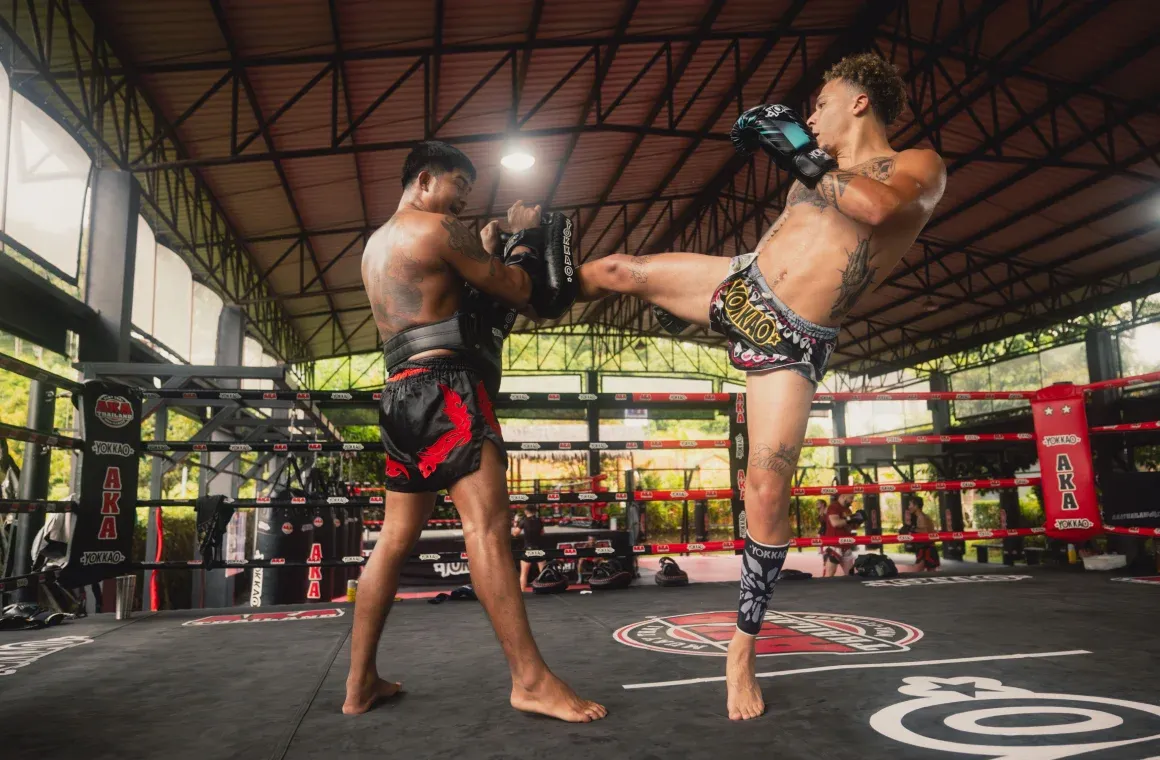 Train Muay Thai at AKA Thailand in Phuket
How to Read Your Opponent's Distance
Distance management is not only about controlling your own movement. You also need to learn to read your opponent. Start paying attention to what happens when you change distance.If They Keep Moving Back
They may be uncomfortable at close range, trying to reset, or waiting for you to overextend. Do not automatically chase them. Use controlled pressure and look for the moment when they stop or change direction.If They Keep Moving Forward
They may be trying to pressure you into punching range or clinch range. Teep, angle out, counter, or establish a frame rather than allowing them to walk into their preferred range for free.If They Stop Moving When You Feint
You may have found a useful reaction to exploit. A fighter who repeatedly reacts to a fake kick may eventually become vulnerable to the real kick or to another technique that takes advantage of the same reaction.If They Constantly Reach for You
They may be fighting outside their ideal range. Make them pay for reaching by changing the distance rather than standing still and exchanging unnecessarily. Over time, you begin to see that distance is a conversation between two fighters.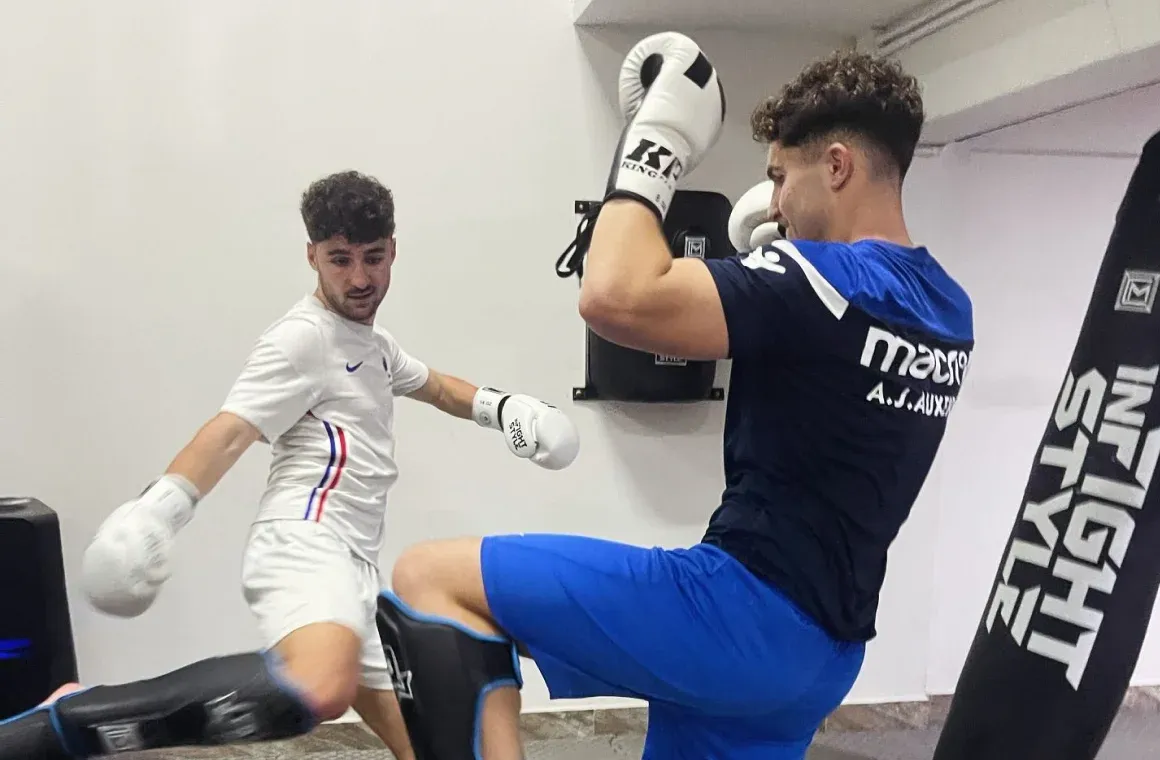 Training at Thaikla Muay Thai Gym in Chiang Mai
Common Distance-Management Mistakes Beginners Make
Standing at the Same Distance All the Time
There is no single perfect range for the entire fight. You should be able to move between ranges depending on your attack, your opponent's attack, and the situation.Reaching for Strikes
If your jab or cross consistently falls short, do not solve the problem by stretching your upper body forward. Use your feet. Move into the appropriate range while maintaining balance and structure.Staying After the Combination
Beginners often focus so much on completing the combination that they forget the opponent is allowed to attack afterward. Practice the exit as deliberately as you practice the strikes.Always Moving Straight Back
Backing away can be useful, but doing it repeatedly gives your opponent predictable movement and can eventually leave you near the ropes or edge of the ring. Learn to change direction.Taking Huge Steps
Large movements can destroy your balance and make your next attack slow. Practice small, controlled adjustments that keep you ready to attack or defend.Chasing the Opponent
If someone keeps moving away from you, sprinting after them is rarely the answer. Cut the space, use feints, control the center, and make them react to you.Thinking Only About Your Own Range
You may be in the perfect range for your jab while simultaneously being in the perfect range for your opponent's kick. Always ask: "What can they hit me with from here?"
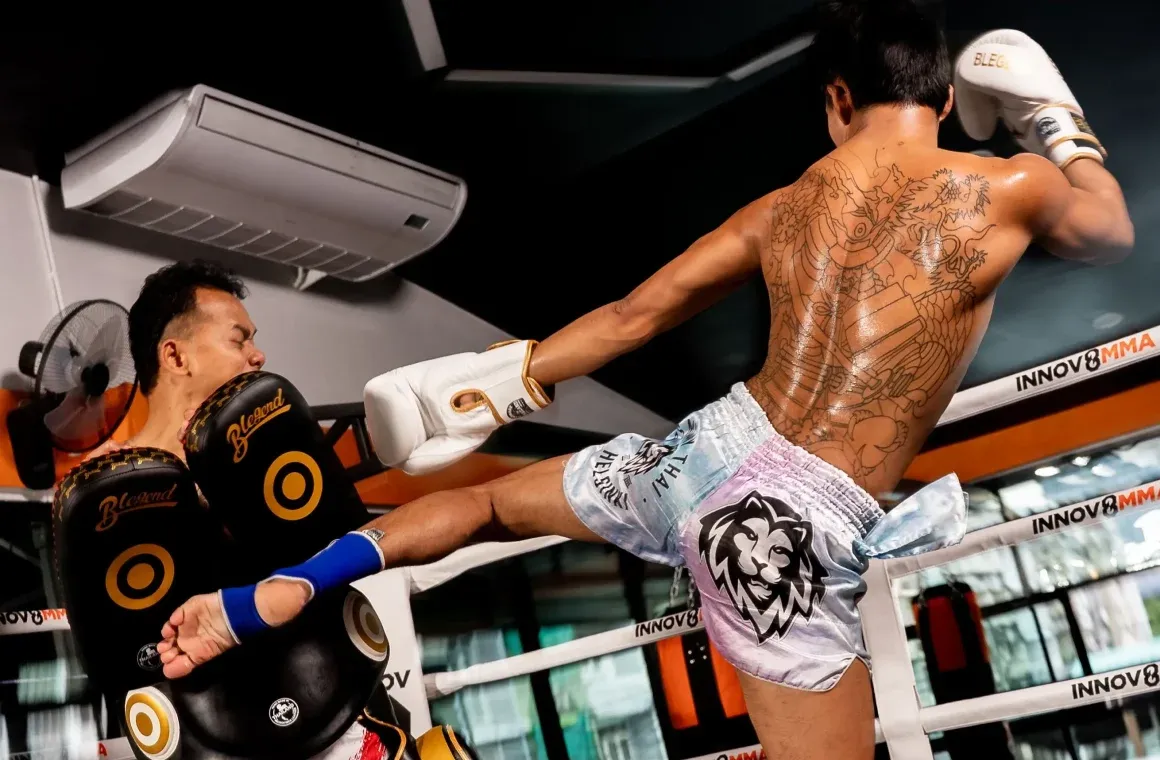 Muay Thai Training at INNOV8 MMA in Bangkok
Muay Thai Distance Drills You Can Practice
Distance management improves through repetition. You do not want to learn it only during hard sparring. Ask your coach to include specific distance-focused drills in pad work, partner drills, and technical sparring.Drill 1: Step In, Strike, Step Out
Start just outside punching range.- Step into range.
- Throw a jab-cross.
- Immediately step back to your starting distance.
- Reset your stance.
- Repeat.
Drill 2: Teep Distance Drill
With a partner, begin at long range. One person slowly steps forward while the other uses the teep to maintain distance. Switch roles. This teaches you to recognize the moment when an opponent is entering your preferred range.Drill 3: Touch-and-Exit
Partner up and work at light intensity. Try to land a controlled jab, then immediately exit the range before your partner can return the same shot. As you improve, allow your partner to counter. This teaches an important habit: attack, then immediately become responsible for what happens next.Drill 4: Range Calling
Have your coach or partner call out:- "Long"
- "Mid"
- "Close"
- "Exit"
Move to the appropriate range and show one or two appropriate techniques. This sounds simple, but it teaches you to associate distance with available weapons.
Drill 5: Shadowboxing With Distance
Instead of standing in one place while shadowboxing, imagine an opponent in front of you. Practice:- Entering behind the jab
- Teeping an advancing opponent
- Throwing a combination
- Exiting at an angle
- Resetting at long range
- Closing distance into the clinch
Your goal is to make movement part of every combination.
A Simple Distance Framework for Sparring
When you spar, you do not need to think about ten different technical concepts at once. For your next technical sparring session, try focusing on these five questions:- Where am I? Am I at long, mid, or close range?
- Where does my opponent want to be?
- What can they hit me with from here?
- What technique works best from my current distance?
- Where will I go after I attack?
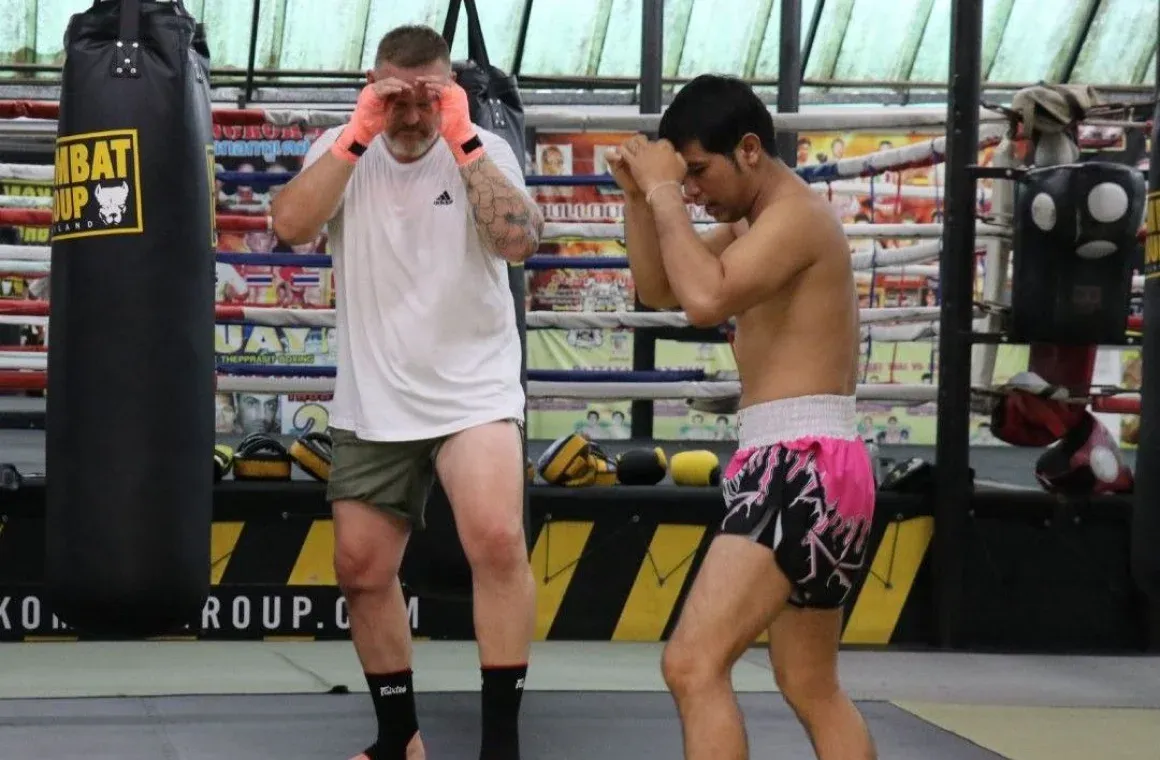 Learning Defence Moves at Kombat Group Thailand in Pattaya
Distance Management Changes With Your Opponent
There is no universal distance strategy that works against everyone. A tall opponent with long legs may make you work harder to enter punching range. A shorter opponent may try to close distance quickly and turn the fight into a boxing or clinch exchange. A pressure fighter may constantly move forward. A counter fighter may want you to chase them. A strong kicker may want to keep you at long range, while a clinch specialist may be looking for opportunities to close the gap. Your job is to manage the distance between two different fighters.How Distance Management Improves Your Muay Thai
Once you start paying attention to distance, several other parts of your Muay Thai begin to improve. Your combinations become more realistic because you learn how to enter and exit them. Your defense becomes more effective because you start moving before strikes reach you rather than relying only on blocks. Your footwork becomes purposeful because you understand why you are moving rather than simply trying to stay active. Your timing improves because you begin recognizing the moment when an opponent enters your range. And your technique becomes more efficient because you stop forcing weapons from positions where they are difficult to use. This is one reason distance management is such an important bridge between learning techniques and actually applying them in sparring.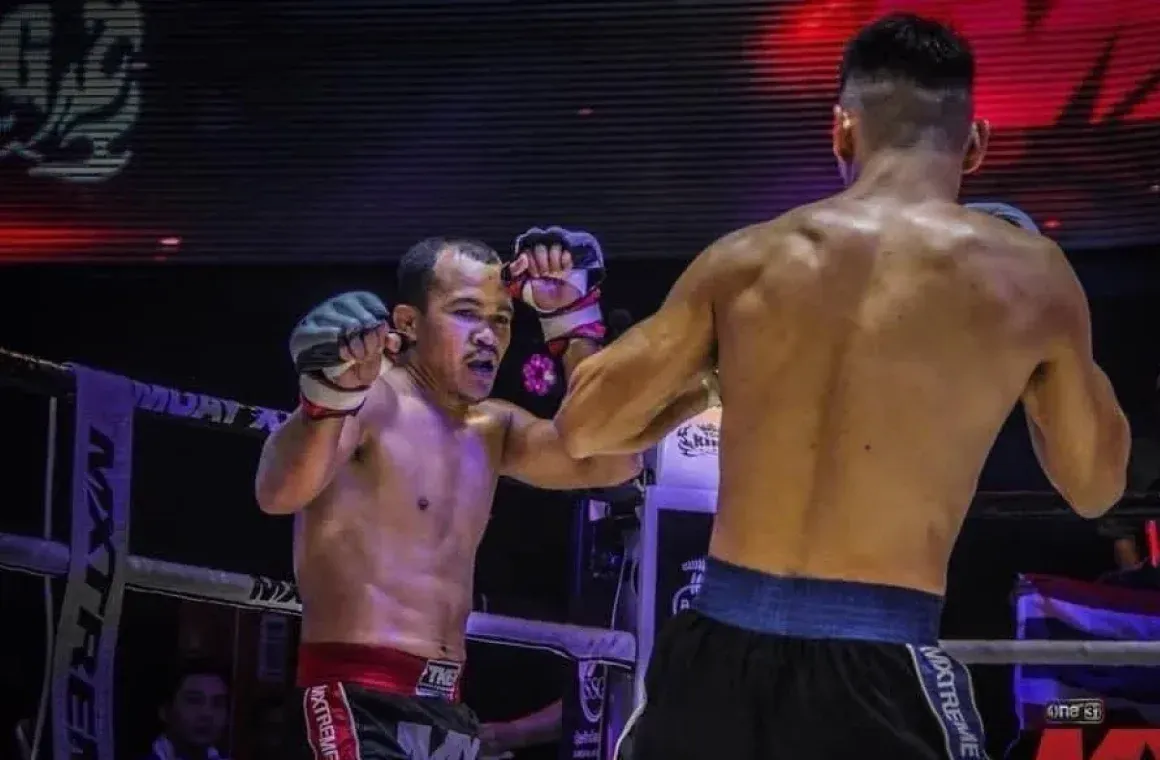 Explore our newest gym on NowMuayThai - Koh Yao Naga Gym in Phangnga
Final Thoughts: Don't Just Learn the Weapon, Learn the Range
You can spend months learning individual Muay Thai techniques and still struggle to use them effectively if you do not understand distance. The jab and the round kick needs the right distance. The teep can create and control distance. The knee and elbow become increasingly useful as the distance closes. The clinch changes the entire relationship between the two fighters. And between all of these ranges, your feet are constantly adjusting. That is why good Muay Thai can sometimes look deceptively simple. A skilled fighter may take only a small step, make a small adjustment, or move just outside the opponent's reach. But that tiny movement can determine whether the next strike lands cleanly or misses completely. Distance management is not about always being far away or always being close. It is about being in the right place for what you want to do and making it difficult for your opponent to be in the right place for what they want to do.Want to Improve Your Muay Thai in Thailand?
Distance management is one of those skills that becomes much easier to understand when you can practice it regularly with experienced trainers and different training partners. Whether you are a beginner learning your first combinations or an intermediate fighter trying to make your sparring more effective, training at a Muay Thai gym in Thailand gives you the opportunity to work on timing, footwork, distance, defense, and technique in every session. Explore Muay Thai gyms across Thailand and find a training environment that matches your experience level, goals, location, and schedule with Now Muay Thai.Want to Learn More About Muay Thai Training?
- Muay Thai Recovery Guide: Ice Baths, Thai Massage & Namman Muay for Your First Week in Thailand
- Walk-in vs. Online Booking: Which Is the Best Way to Book a Muay Thai Class in Thailand?
- Authentic Fight Camp vs. Modern Boutique Gym: Which Muay Thai Experience Is Right for You?
- How to Plan Your Muay Thai Trip in Thailand Around Your Schedule
- Why Female Travellers Should Try Muay Thai in Thailand
- Find Your Best Version Through Muay Thai
Learn more about Muay Thai

Muay Thai Recovery Guide: Ice Baths, Thai Massage & Namman Muay for Your First Week in Thailand
Authentic Fight Camp vs. Modern Boutique Gym: Finding Your Perfect Muay Thai Fit in Thailand
Walk-in vs. Online Booking: Which Is the Best Way to Book a Muay Thai Class in Thailand?
Thailand Summer Travel Guide: Best Destinations to Visit from March to May
Back